My Travels with Tintin – Malaysia

I have one Tintin album that I WISH was in Malaysian, however the English edition of Flight 714 to Sydney will have to do. Published in 2011 by Egmont, as part of a 25-album series (including Tintin and the Lake of the Sharks) for the United Kingdom market, it is generally the “stand in” global English edition for markets that don’t have their own publisher.
Not an ideal choice for the Malaysian entry in my foreign language edition collection, after all, Malaysian editions of Tintin DO exist… including “Penergangan 714” (Flight 714 to Sydney), but they’re long out of print, extremely difficult to find… and very pricey when you do.
The actual Malaysian editions were originally published between 1975 to 1979 by Syarikat Delta Communications. Six of the albums, The Black Island, The Secret of the Unicorn, Red Rackham’s Treasure, The Seven Crystal Balls, Prisoners of the Sun, and Flight 714 to Sydney were published in 2-part softcover editions, and three of the albums, Destination Moon, Explorers on the Moon, and a second version of Flight 714 to Sydney were published as the standard “all-in-one” albums.

Of course the 1970s were a long time ago now and because Malay and Indonesian are closely related, many readers in Malaysia have grown up reading the Indonesian translations published by companies like Indira and Gramedia – not to mention the English editions. As such, it doesn’t appear like they’re in any hurry to re-translate and publish actual Malaysian editions any time soon. Many of the foreign language editions around the globe got a boost by the 2011 Steven Spielberg film, The Adventures of Tintin, but if that didn’t rekindle the interest of Malaysian publishers, I doubt anything will… unless we get that long-promised Peter Jackson follow up film maybe.
Still, I bought it at the Kuala Lumpur airport WHSmith bookstore, and it has a price sticker for 36.50 Malaysian Ringgit on it, so I’m calling it legit. However, if anyone has a Malaysian edition they’d be willing to part with for a reasonable price… I’m all ears.
My trips to Malaysia:
I’ve been to Malaysia twice… and I’d love to go back!
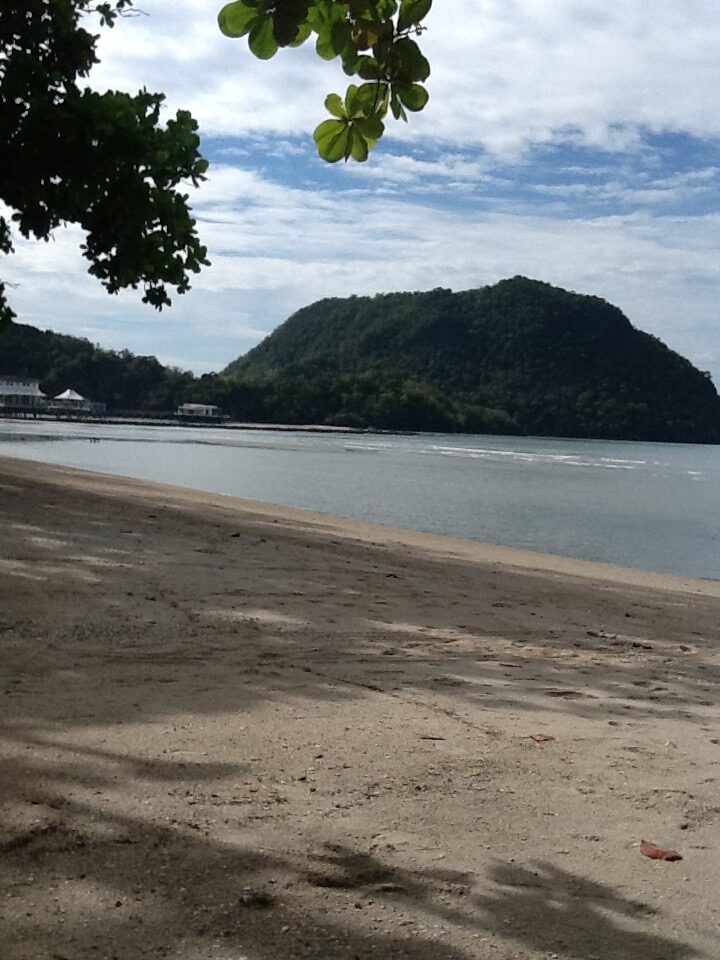
My first visit to Malaysia, from March 26 to 31, 2017, was an amazing family beach vacation on the island of Langkawi. After our slightly disappointing vacation the previous year in Bali, Indonesia, Langkawi, Malaysia was recommended to us by some friends, and it didn’t disappoint.
If you don’t know where Langkawi is, I don’t blame you. It’s not nearly as famous as some of its neighbours, but it’s an island paradise and perfect for a beach-centered vacation. It’s located just off the coast of the Malaysian peninsula, right near the northern border with Thailand – so close, in fact, that you can see Thailand from the island itself. We arrived on the evening of March 26 and were greeted by the lovely staff at the Westin Langkawi Resort and Spa.
For the first couple of days we mainly just explored the Westin’s beach front property. The weather was beautiful, nice and warm but not too hot, and it was perfect for taking a stroll along the beach and investigating the tidal pools. The water was calm and warm, so we did some snorkeling close to shore and then went back up to the resort for some rest and relaxation, or even a dip in the pool. It was a bit of a hike, but on the second day (March 28) we decided to walk in to check out Kuah – the local tourist town. There wasn’t a lot going on, but we were able to get ahold of some Nasi Goreng and check out the night market. It was interesting, but not too intense. Simply lovely.
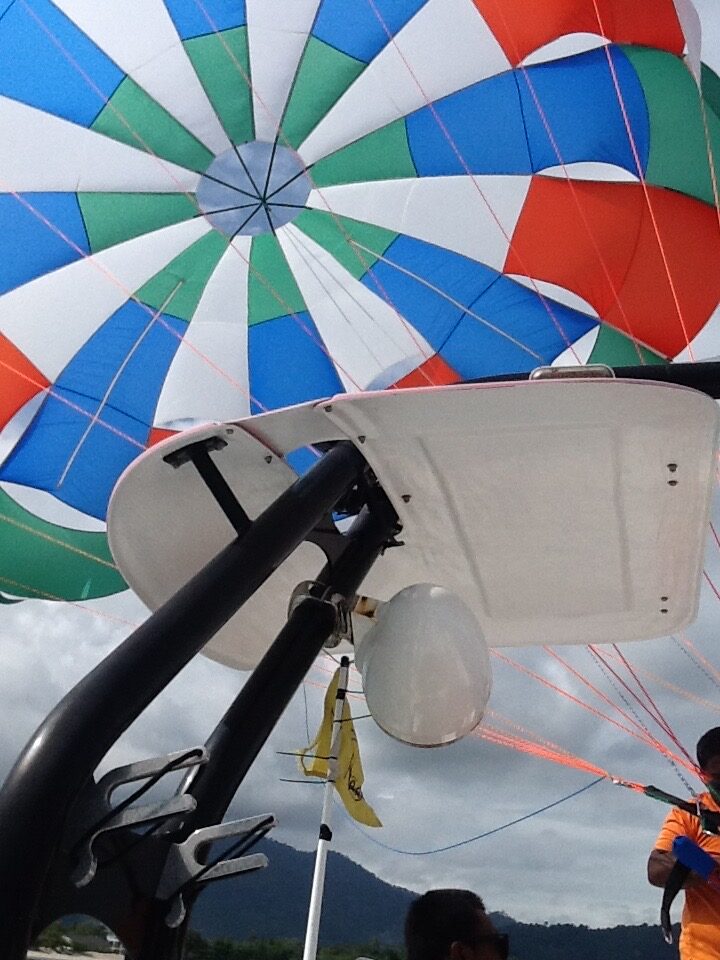
After a couple of days just lounging around, on March 29 we decided we needed a bit of adventure and went on a bit of a trip across the island to the launch for the para-sailing. Unlike the crowded “package” that we fell for in Bali, this time we booked the activity as a stand-alone and it was worth it. We had a private boat for just the three of us. Since we were traveling with our son, who was 8 years old at the time, I assumed we’d need to go up in a tandem rig. Luckily though, they had a special harness so that all three of us could go up at the same time! With our son sitting in the middle, one side of the rig was definitely sitting a bit lower than the other… but that just meant my wife got the better view, right? Still, there was nothing to complain about. It was a bit cloudy that day, but not terribly windy, so we were able to get up quite high with the parachute. So high, in fact, that we could see a huge portion of the island itself, not to mention a clear view of Thailand across the border. It was great fun.
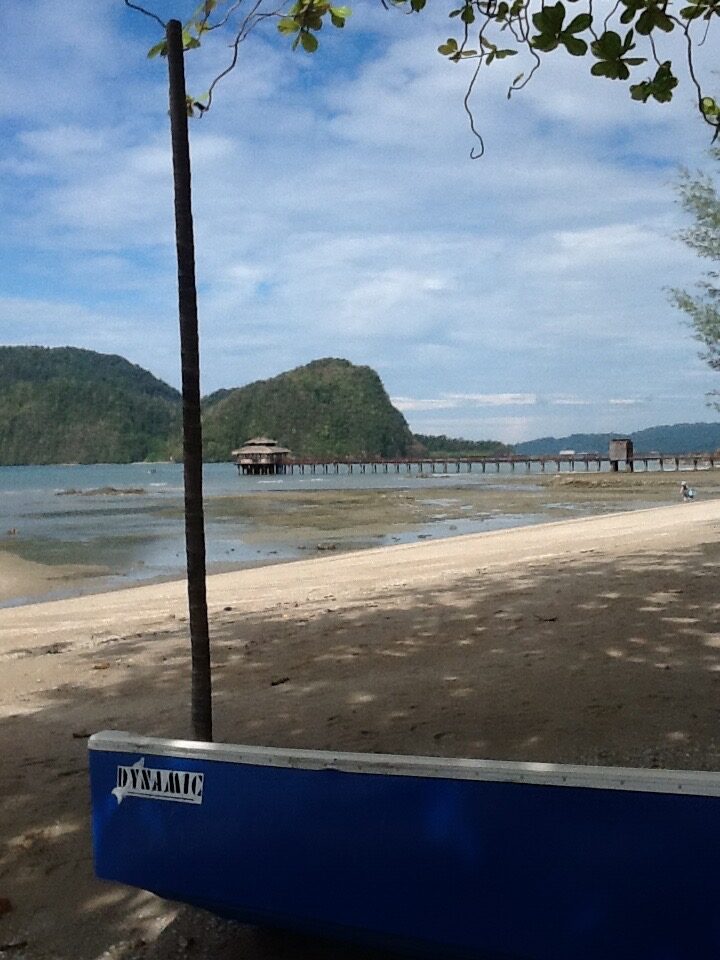
The next day, March 30, we were able book out one of the 3-person kayaks from the Westin’s activities shack and went on a self-guided paddle tour of the area around the resort. We had to wait for high-tide – otherwise it was too difficult to drag the kayak all the way down to the water, through the tidal pools. But once we got going, it was great. There were a few smaller islands near the resort, and with how calm the water was, we were able to paddle our way across to them. I was tired when we got back to the resort, but luckily it was the perfect excuse to relax some more.
Our final day was a bit tricky to navigate. Since we needed to check out of the resort in the morning, but our plane wasn’t leaving until nearly 8 hours later, we had some time to kill. Once again we hiked down to Kuah and took our time having lunch and then wandered around to check out some of the shopping. As it turned out, we had such a good time that we were in a bit of a rush to catch the shuttle bus back to the Westin to collect our bags and then off to the small local airport to make a connecting flight in Kuala Lumpur. When we arrive at the Kuah airport we were surprised to hear our 8-year old son being paged over the intercom. It seems they just pulled the first name from the group and once they knew we had all arrived the boarding could commence. We enjoyed Langkawi so much, we almost didn’t leave!
Our second visit to Malaysia, from July 14 to 18, 2019, was an equally amazing family vacation, but this time we decided to visit the capital city of Kuala Lumpur… or “KL” as the cool people call it.
After our experience in Langkawi, I think our expectations were high, and we weren’t disappointed. I haven’t been to Jakarta (Indonesia) or Bangkok (Thailand), but after comparing our three beach vacations in Bali (Indonesia), Langkawi (Malaysia), and Phuket (Thailand), Malaysia just seemed a bit more our speed… maybe a little less intense (for different reasons) than the other two.
We hit the ground running in KL. Our first day on the ground, July 15, we scheduled three main items on the itinerary… the first of which, the Kuala Lumpur Railway Station Museum, we couldn’t find. Despite our internet research, after searching around the station with its beautiful “Moorish-Mughal” architecture, we couldn’t find it… likely because it had permanently closed. I’ve since learned that it might’ve been relocated, but it was a bit of a disappointment at the time since my 10-year-old son was really looking forward to it. Instead he had to be satisfied with a self-guided tour of the National Museum of Malaysia. We usually like to learn a bit about the history of the countries we visit, and this was the place to start in KL. There were a lot of displays, everything from the flora and fauna, to the ancient history of the Malay people, to more “current” events like Japanese invasion of Malaya, and the creation of Malaysia on September 16, 1963, through a merger with the British colonies of Singapore (for 2 whole years!), Sabah (North Borneo), and Sarawak. I think we would’ve enjoyed learning more, but there wasn’t any working air conditioning in the building so it was a bit intense.
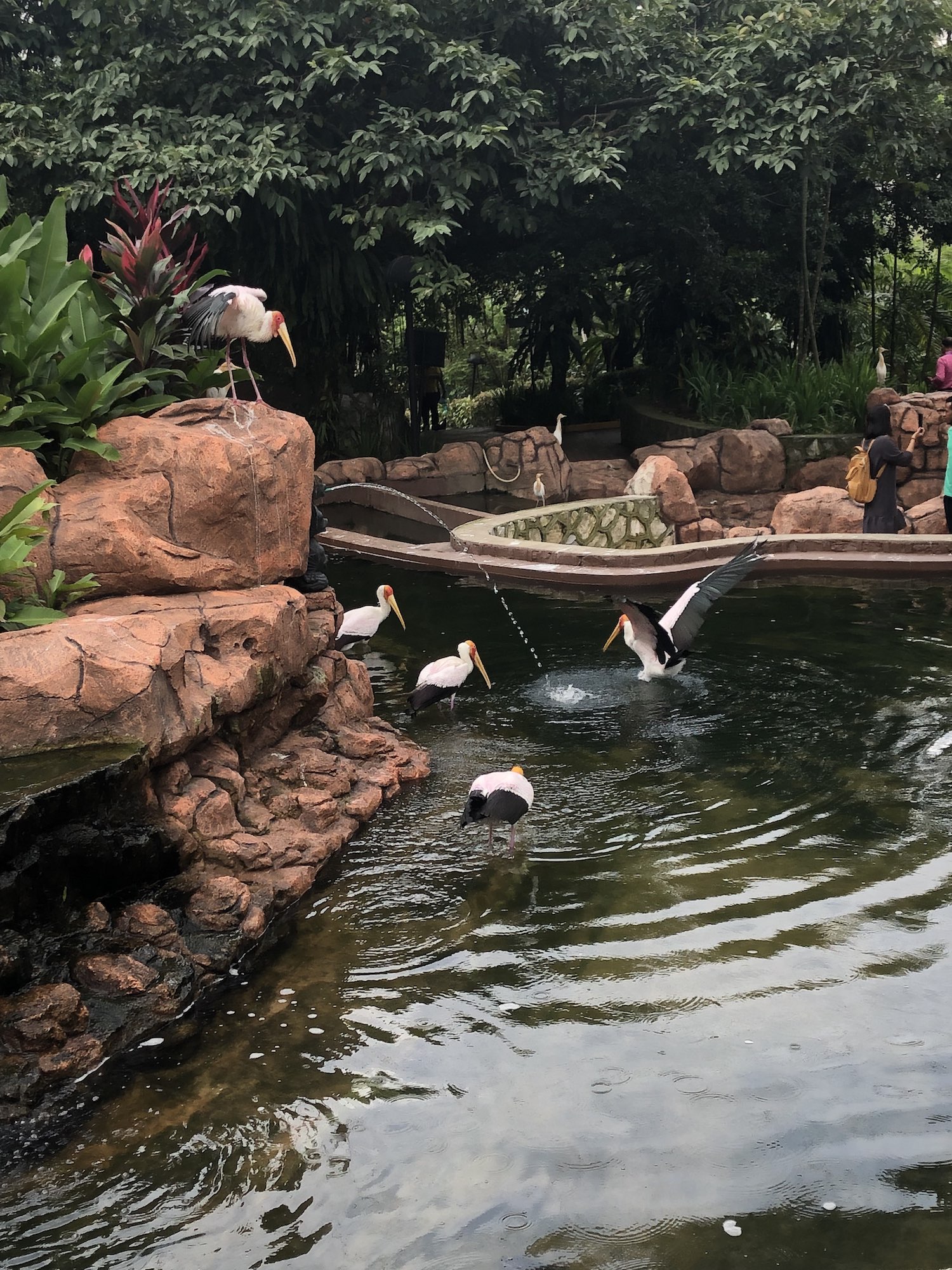
Afterwards we decided to take a walk and check out the Kuala Lumpur Bird Park. Apparently it’s the world’s largest free-flight, walk-in aviary. Set in a sprawling valley, this renowned eco-tourism park is home to more than 3,000 birds… and I’m pretty sure we saw all of them.
The next day, July 16 we were back in the same area, but this time we were focused on the National Mosque of Malaysia. We had to stand in line a little bit to get in, which was a bit surprising since it’s huge. It covers 13 acres including the gardens, and apparently has a capacity for 15,000 people, but I suppose if you want to keep a degree of serenity you don’t want all 15,000 people in there at once… especially if most of them are tourists. As a non-muslim, it did feel a bit odd that only my wife had to wear a purple robe with a hood covering her head whereas my son and I had no real extra requirements (aside from covering our knees and shoulders). However, since most of it was an outdoor experience and it was pouring rain, we only stayed long enough to check out the main sights, including the 73-metre-high minaret and a 16-pointed star concrete main roof.
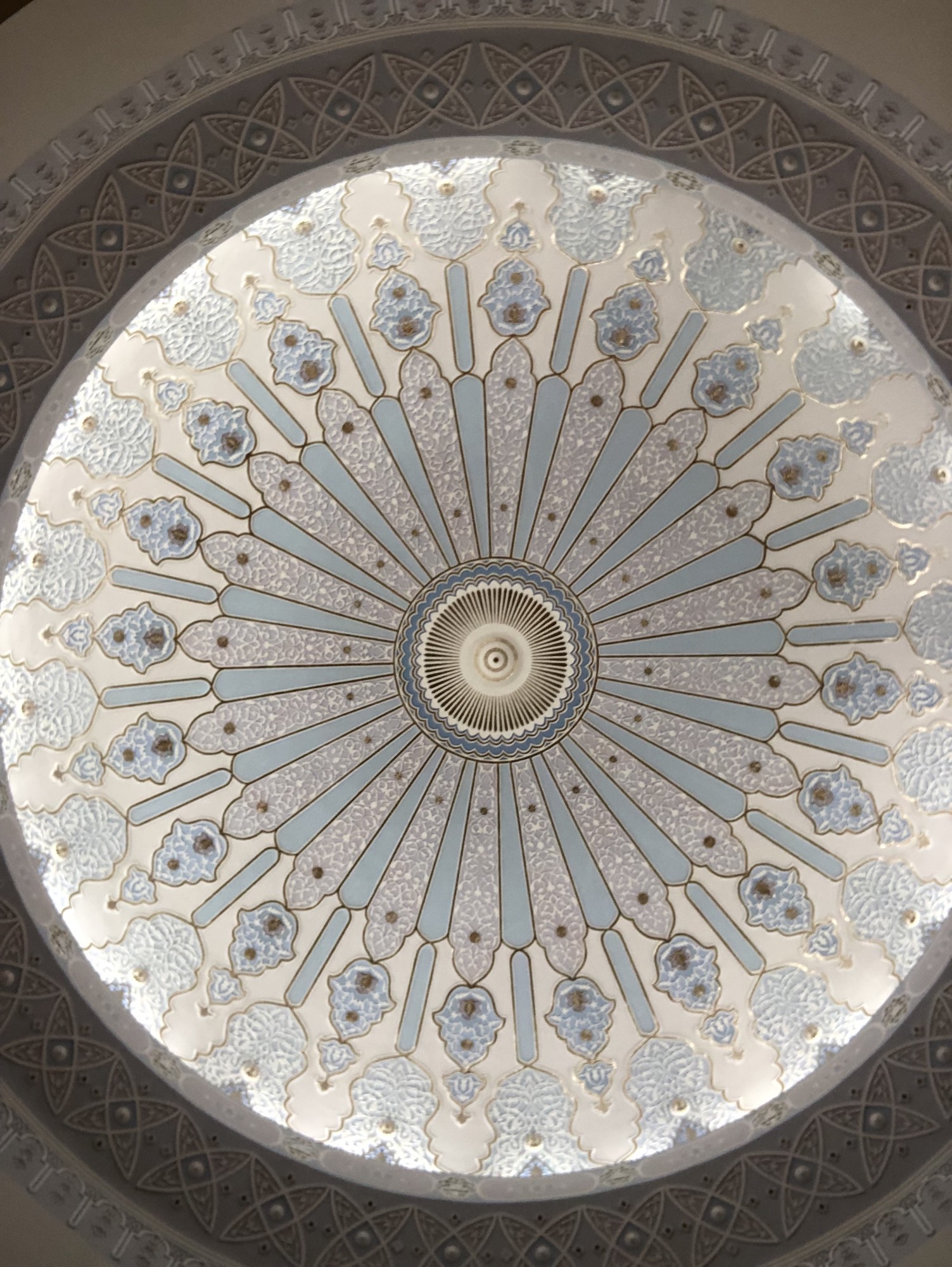
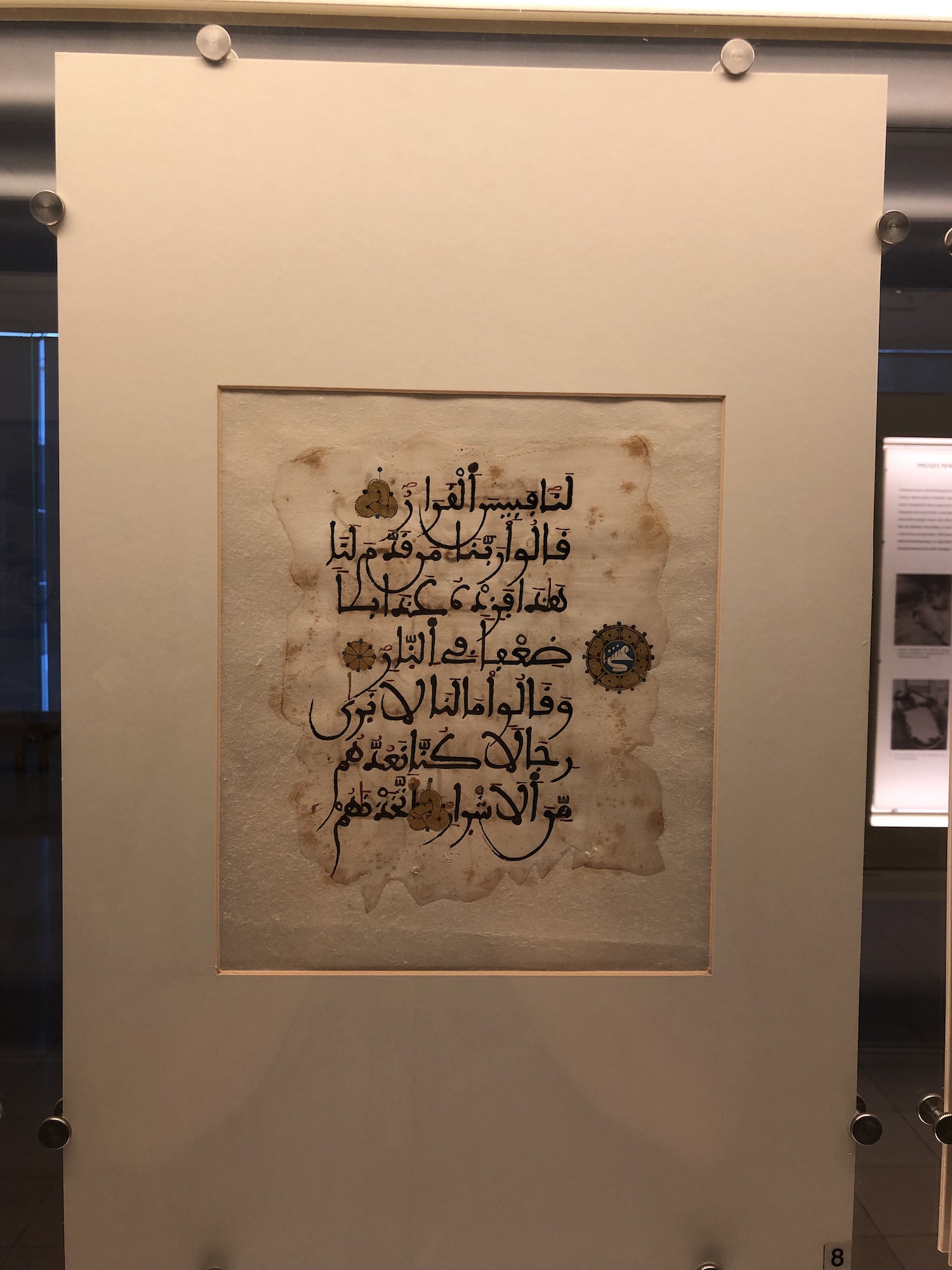
What was more interesting was checking out the nearby Islamic Arts Museum Malaysia. It’s reportedly the largest museum of Islamic art in Southeast Asia, and houses over 7,000 artifacts. We checked out all 12 galleries, and saw a huge amount of Islamic decorative arts, textiles, manuscripts, ceramics, and architecture. It’s focused on Southeast Asia, but features works from across the Islamic world.
Afterwards, we realized that it had stopped raining for a bit and decided to walk around the area a bit and then stumbled across the Royal Malaysia Police Museum. It wasn’t only our list of activities for the day, but my son was very keen to check it out, so we went with the flow. As you might expect, the museum showcases the history of the Royal Malaysia Police. The museum wasn’t huge, but did include some interesting and interactive exhibits. We learned about how the Royal Malaysia Police were established under British colonial rule, their role during the “Malayan Emergency” (a.k.a the independence war) and after true independence. The exhibits covered the period up until the 1970s, and it was worth stumbling across, that’s for sure.
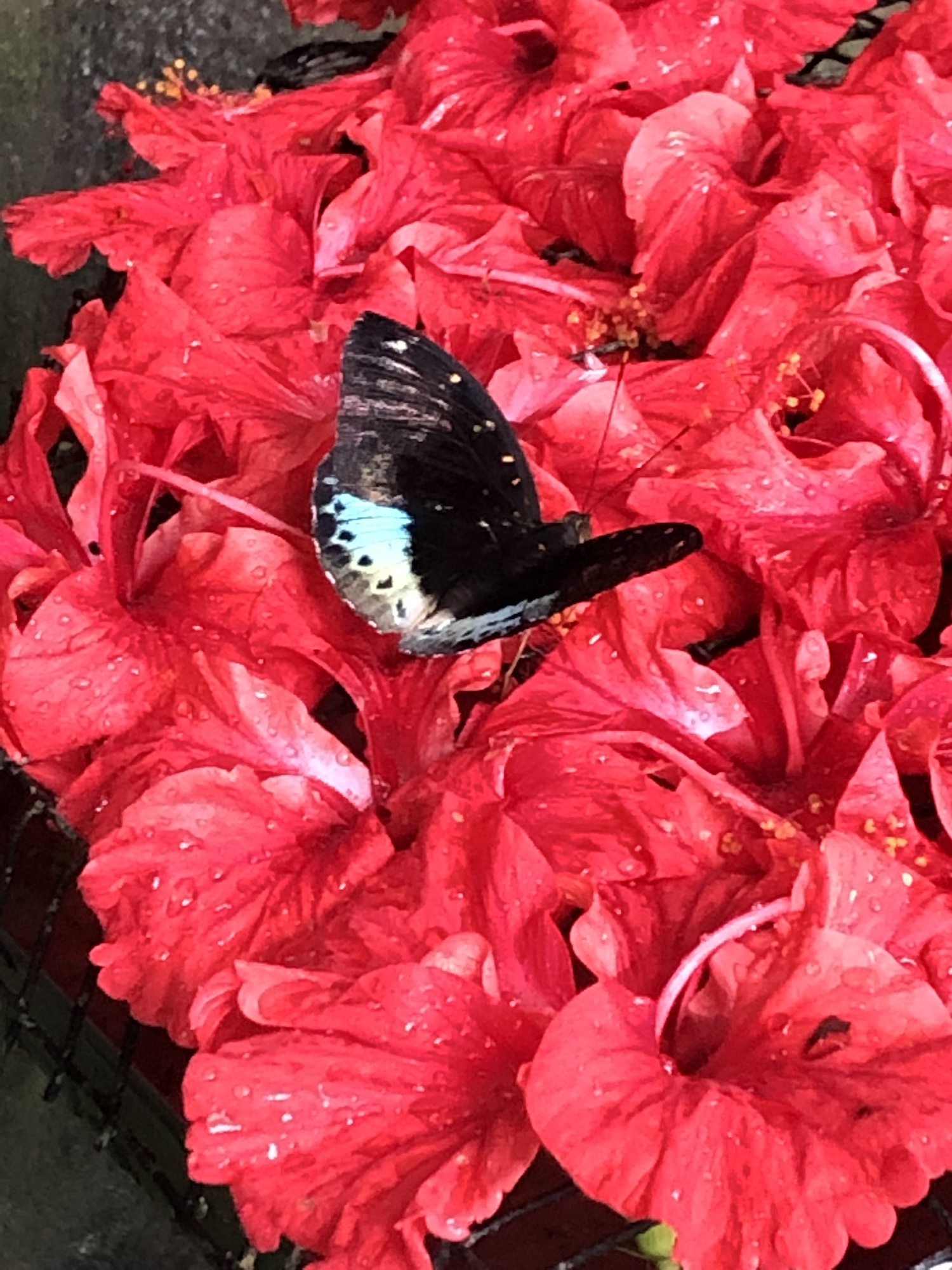
After spending most of the day dodging the rain inside museums we decided to get some fresh air and take a walk up the hill to visit the Kuala Lumpur Butterfly Park. It was still a little damp because of the rain, but that made the experience even better I think. The main part of the experience is the butterfly enclosure itself. It’s a massive flight cage covered in netting and according to the internet there are more than that 5,000 butterflies representing more than 120 species. There’s also 15,000 plants, such as exotic ferns and flowering vines that grow in and around little waterfalls and koi ponds. You can probably imagine the earthy smell of all that after the rain, let alone the feast of colour for your eyes. I’m not sure if we saw all 5,000 butterflies, but we came close. They were everywhere, and were very easy to see up close… especially at the many feeding trays covered in fresh fruit.
At the end of the tour there is a little “insect museum” portion as well. Most of it showcased a variety of pinned butterfly examples from all over the world, but there was also a selection of live beetles, spiders, scorpions, etc. in terrariums. My wife took a pass on most of those… but I thought it was interesting to see.
The next day, July 17, we decided to take our “go-to” mode of transportation, the monorail, back to the city centre to check out the “other side of the tracks” this time. Our first stop was the Central Market. A heritage site in and of itself, it was originally built in 1888 and then remodeled in 1937 into its current Art Deco style. There are 350 vendors, split into three zones: Lorong Melayu (Malay), Lorong Cina (Chinese), and Lorong India (Indian), and it’s got all the arts, crafts and souvenirs you’d expect. Right next to the main building is the Kasturi Walk – which is basically the outdoor portion of the market… more stalls, street food, and more souvenirs.
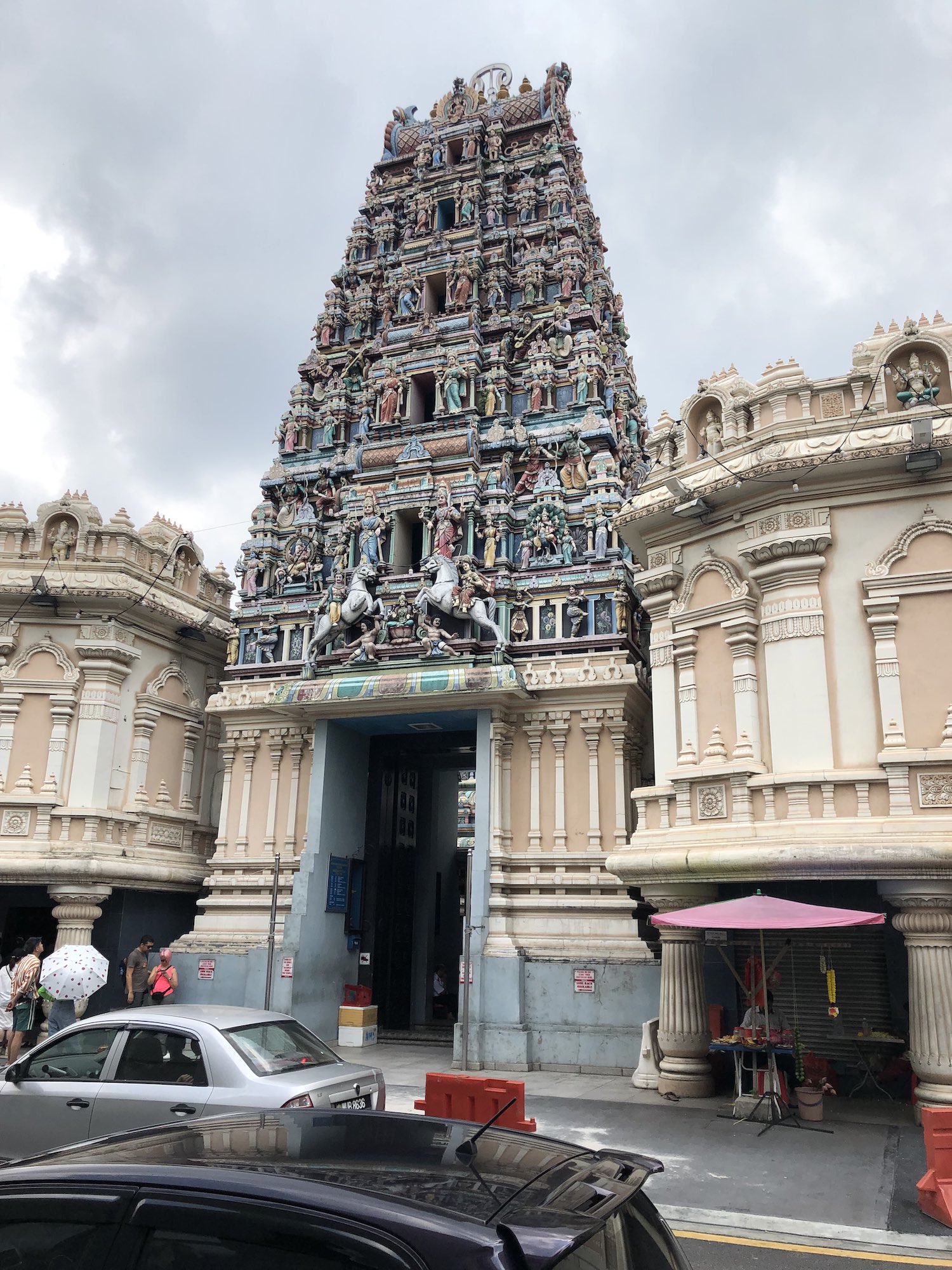
Eventually we made our way through the nearby Chinatown and down to the Sri Mahamariamman Temple – the oldest (and richest) functioning Hindu temple in Kuala Lumpur. The temple was established in 1873 as a private family shrine before opening to the public in the late 1920s. The temple is dedicated to Mariamman, a manifestation of the goddess Parvati and a protector believed to provide healing and protection from disease. You can’t miss the Raja Gopuram, a 23-metre, five-tiered entrance tower adorned with 228 Hindu deities… it kind of stands out. According to the internet, the temple’s layout is designed to resemble a human body lying on its back. The gopuram represents the feet (the gateway between the material and spiritual worlds), while the inner sanctum corresponds to the head.
After cooling our heels at the hotel for a while, we decided to take a trip down to see the Taman Connaught Night Market. Even though we’d already explored the Central Market, a) night markets have a charm all their own, and b) this one is only open on Wednesdays, so it was our one and only chance. Not quite knowing how to get there, we decided to take a taxi, but after we arrived, the plan was to walk to the other end and then catch a subway at the Taman Connaught station back to the hotel. It seemed like a good plan. Of course, stretching for over 2 kilometres along Jalan Cerdas street and featuring more than 700 stalls, it’s a huge market and a long walk. Still, we enjoyed every step. We ate plenty of delicious street food for our dinner, and left room for some very fresh fruit for desert. We bought a few souveniers (I was, of course, on the lookout for a beat up copy of a Malay Tintin album… just in case) and generally had a great time. However, after we reached the far end of the market and started heading towards the subway station… I admit, I got a bit lost.
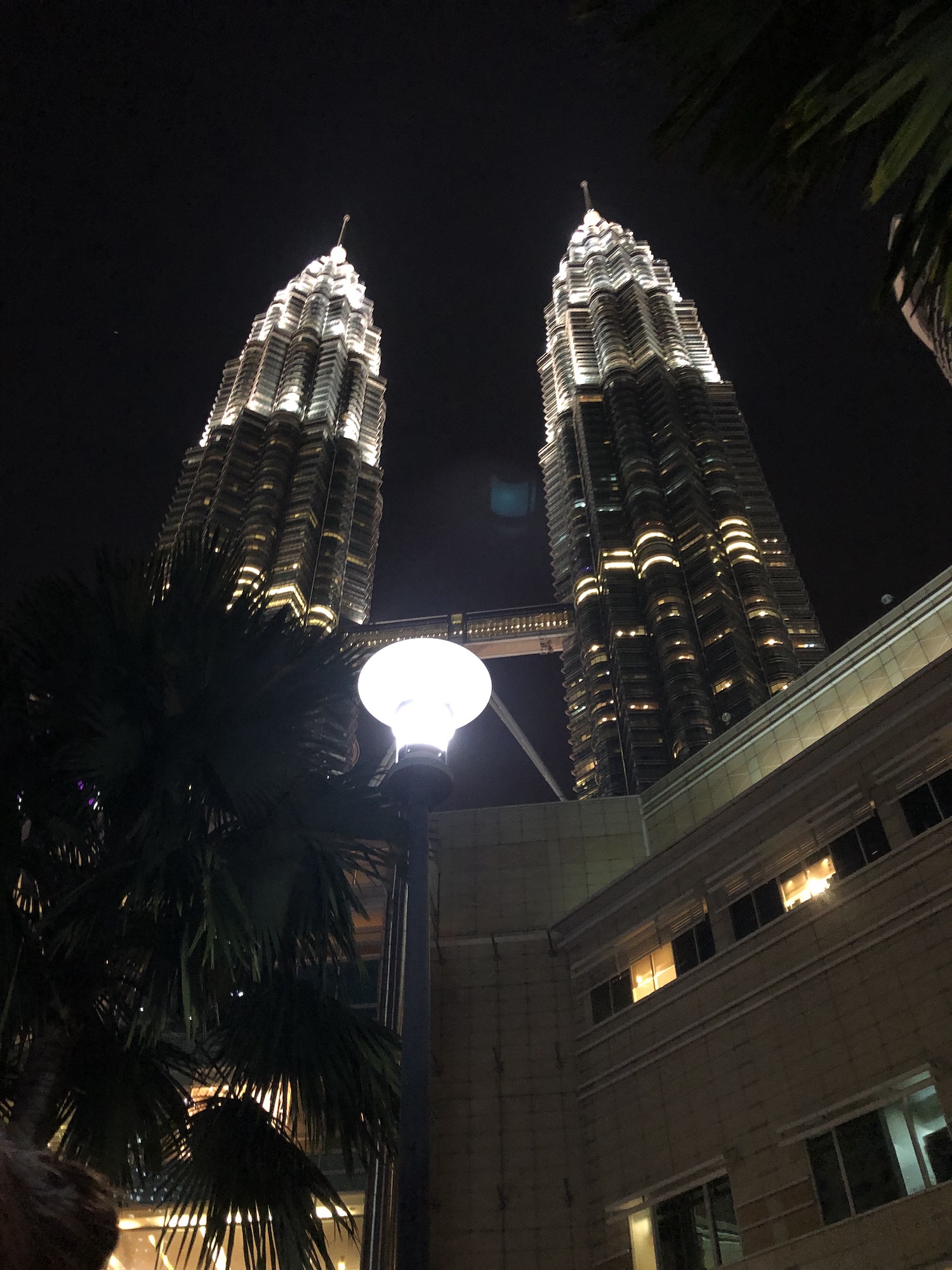
By the time we were done, it was quite dark, and navigating by Google maps wasn’t quite as easy as I’d hoped. The internet was sketchy and even though I knew where the station was… getting to it wasn’t that straightforward. There was a little matter of a) some residential streets with unfortunately placed walls in the way, and b) a major 4-lane freeway to cross. After dragging my weary wife and 10-year old son through the back alleys for about 15 minutes, with no overpass or even taxi in sight, I decided we needed some local help. We entered a (by that time a very closed) business park and I headed for the first light I could see. We walked down a non-descript entryway and ended up in a large warehouse space… chock full of luxury vehicles of every description! There was also a very surprised Saudi man sitting at a single desk in the middle of the huge flock of Lamborghinis, Ferraris, Porsches, you name it. After a few explanations and questions on how to get to the subway station, our new friend decided instead to order an Uber to take us away. He was very kind, even offered my son a cookie and a juice box, but I got the feeling he was as happy to see us leave as we were. 20 minutes later we were sitting on steps in the plaza outside the Petronas Twin Towers, watching the water/light show. It was an odd experience to say the least.
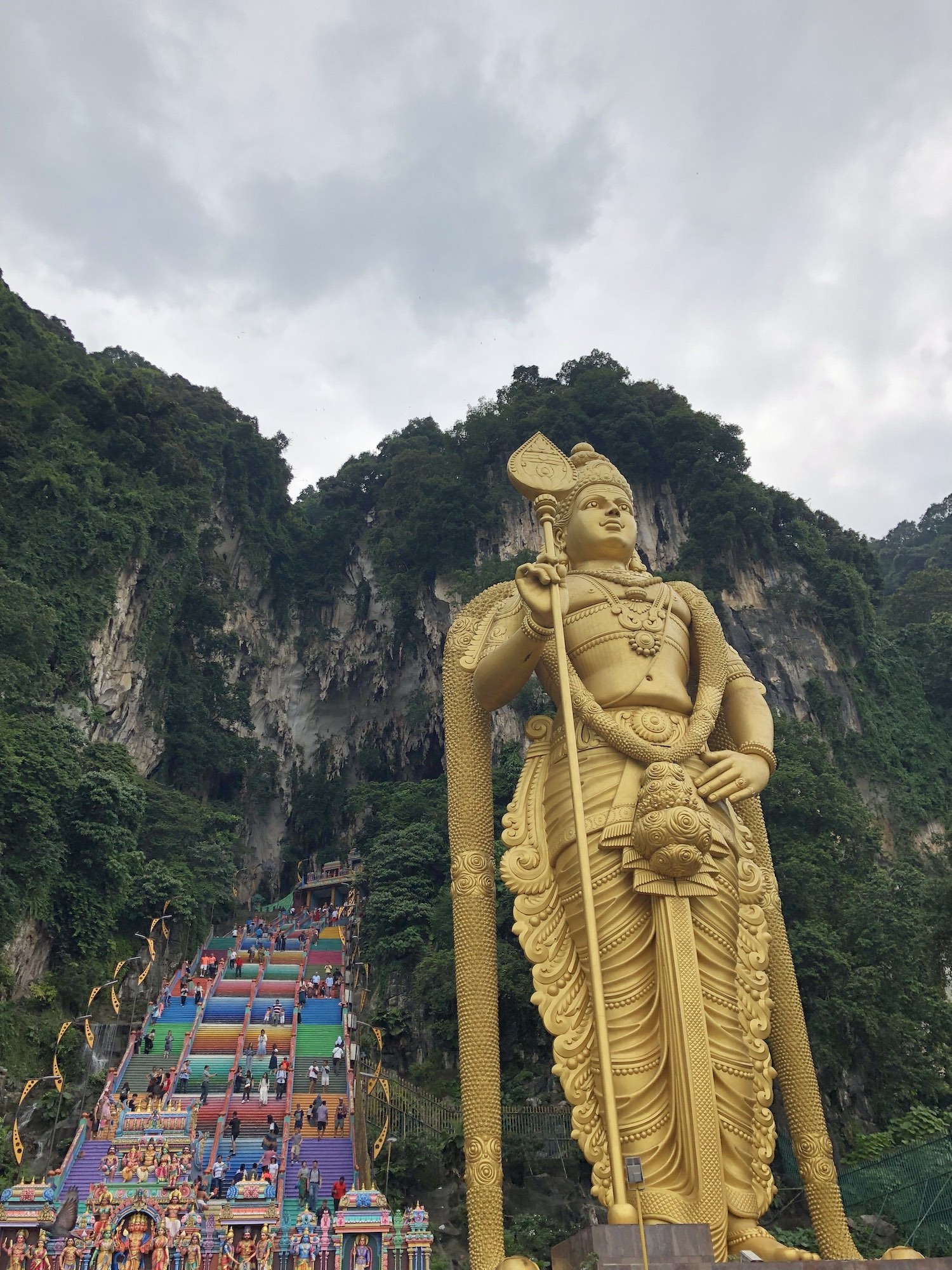
Our last day, July 18, we decided to take a break from the city and check out the Batu Caves – a 400-million-year-old limestone hill featuring a series of caves and cave temples about 15 km outside Kuala Lumpur.
The Batu Caves are the site of a major Hindu shrine, and are arguably famous for the 272 brightly painted steps next to a massive 42.7-meter tall golden statue dedicated to Lord Murugan. At the top of the steps is the “Cathedral Cave,” and it features high vaulted ceilings and multiple Hindu shrines and temples.
The caves may be millions of years old, but they began to be developed as a place of worship in 1891 by K. Thamboosamy Pillai, a Tamil trader who was inspired by the cave entrance’s resemblance to a vel (spear). Now the site attracts over 1.5 million pilgrims annually, specifically for the Hindu festival of Thaipusam, where devotees carry kavadi (burdens) up the steps to honor Lord Murugan. We didn’t carry any burdens other than our small backpacks, but it was tough enough to make it up all those steps. The climb is made even more interesting by the large population of macaques (monkeys) that live on the limestone cliffs. They are VERY tourist savvy and you need to keep a close watch on all your possessions… unless you enjoy trying to barter some snacks for your cellphone with a bunch of cranky macaques.
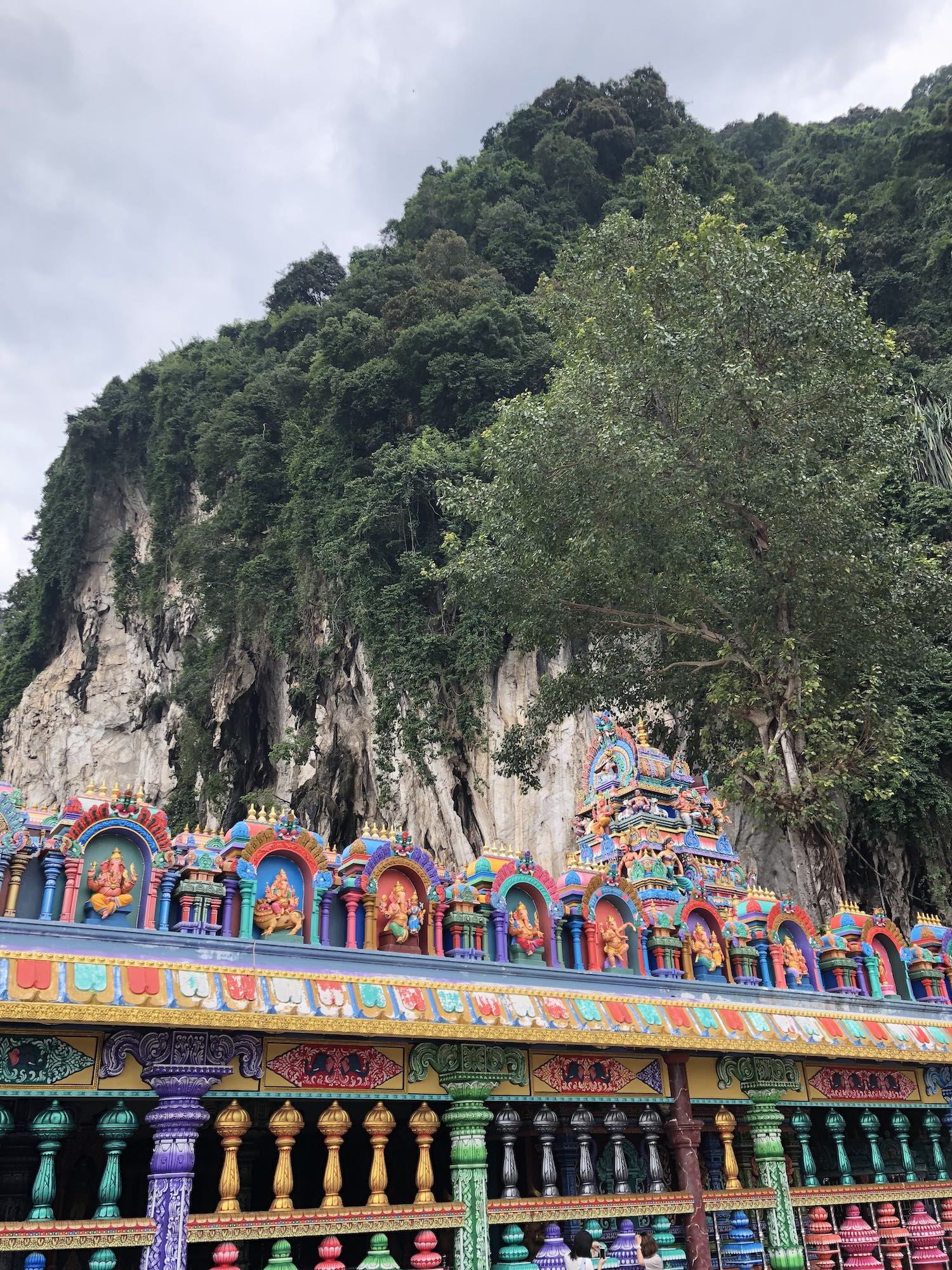
Besides the “Catherdral Cave” there’s also the Ramayana Cave, which features a “small” – only 15 metres tall – statue of Hanuman at the entrance and as well as a temple. The cave itself features a series of paintings depicting events from the Hindu epic Ramayana. There is also the Cave Villa, located at the base of the hill. It’s a cultural and art-focused attraction located at the base of the complex that reportedly offers “a less crowded” and “less climbing steps” alternative to the main Temple Cave. We looked at both of these but decided to take a pass. Unlike the main cave, there is a fee to enter each of them… and honestly it wasn’t the money so much as the feeling that they were a bit too… “Bollywood” for our liking. Instead we just took a bit of a walk around the plaza, dodged some macaques, and checked out some of the tourist trinket stalls. I’m glad we made the trip out to the Batu Caves. It seemed like the perfect cap to our family vacation.
All in all, our trip to Kuala Lumpur was amazing. The people were generally kind and friendly and I’d love to go back!
Discover more from strobez
Subscribe to get the latest posts sent to your email.
