Supercolor-Tryphonar (The Castafiore Emerald)
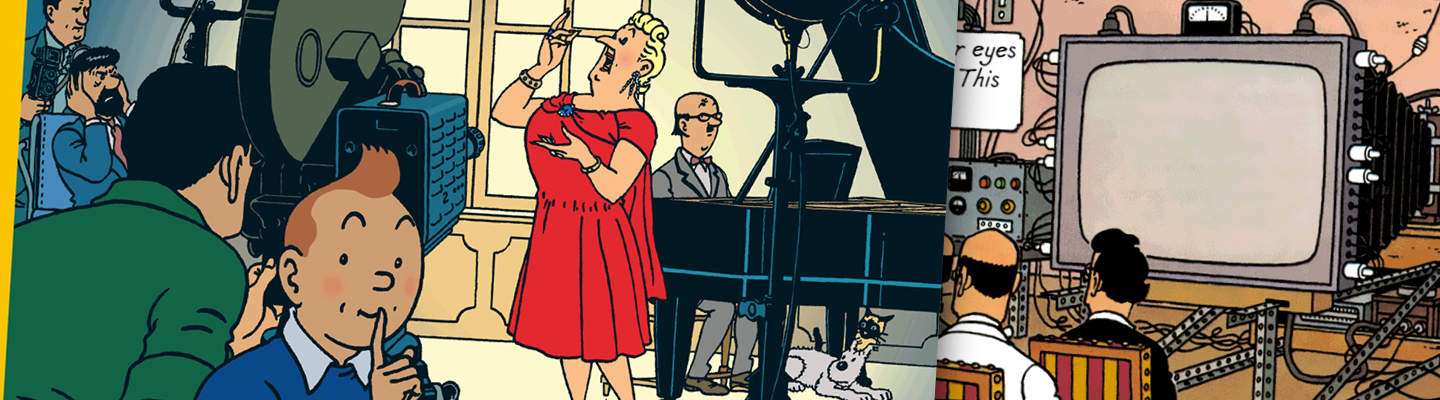
The Castafiore Emerald (French: Les Bijoux de la Castafiore) is the twenty-first volume of The Adventures of Tintin, the comics series by Belgian cartoonist Hergé. It was serialised weekly from July 1961 to September 1962 in Tintin magazine.
In contrast to the previous Tintin books, Hergé deliberately broke the adventure formula he had created. It is the only book in the Tintin series where the characters remain at home in Marlinspike Hall, Captain Haddock’s family estate in Belgium, and do not travel abroad or confront dangerous criminals. The plot concerns the visit of the opera singer Bianca Castafiore and the subsequent theft of her emerald.
Although The Castafiore Emerald received critical acclaim for making its characters follow a lead of false trails, it was not a commercial success due to the experimental nature of its narrative. It was published as a book by Casterman shortly after its conclusion.
– courtesy of Wikipedia
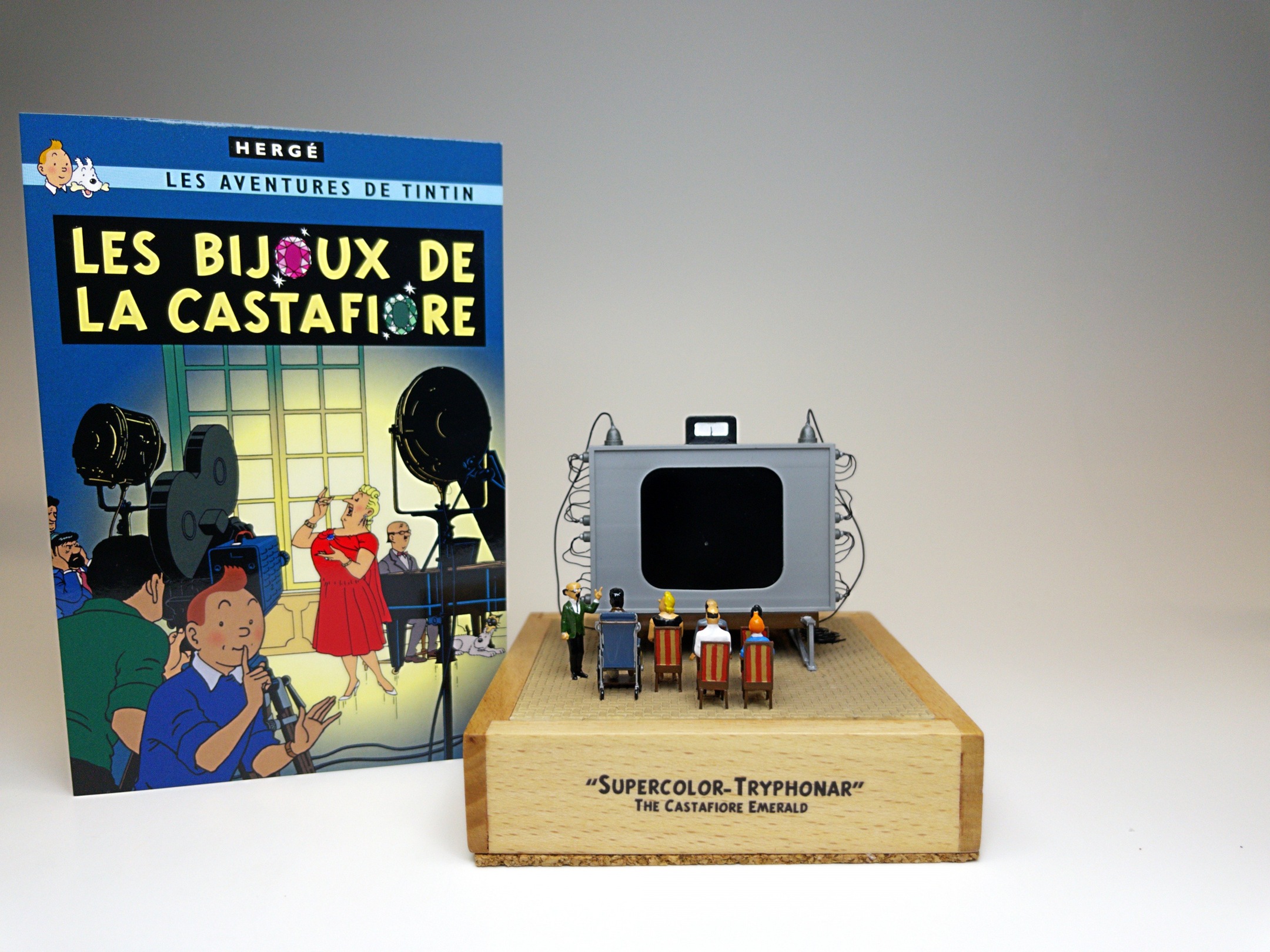
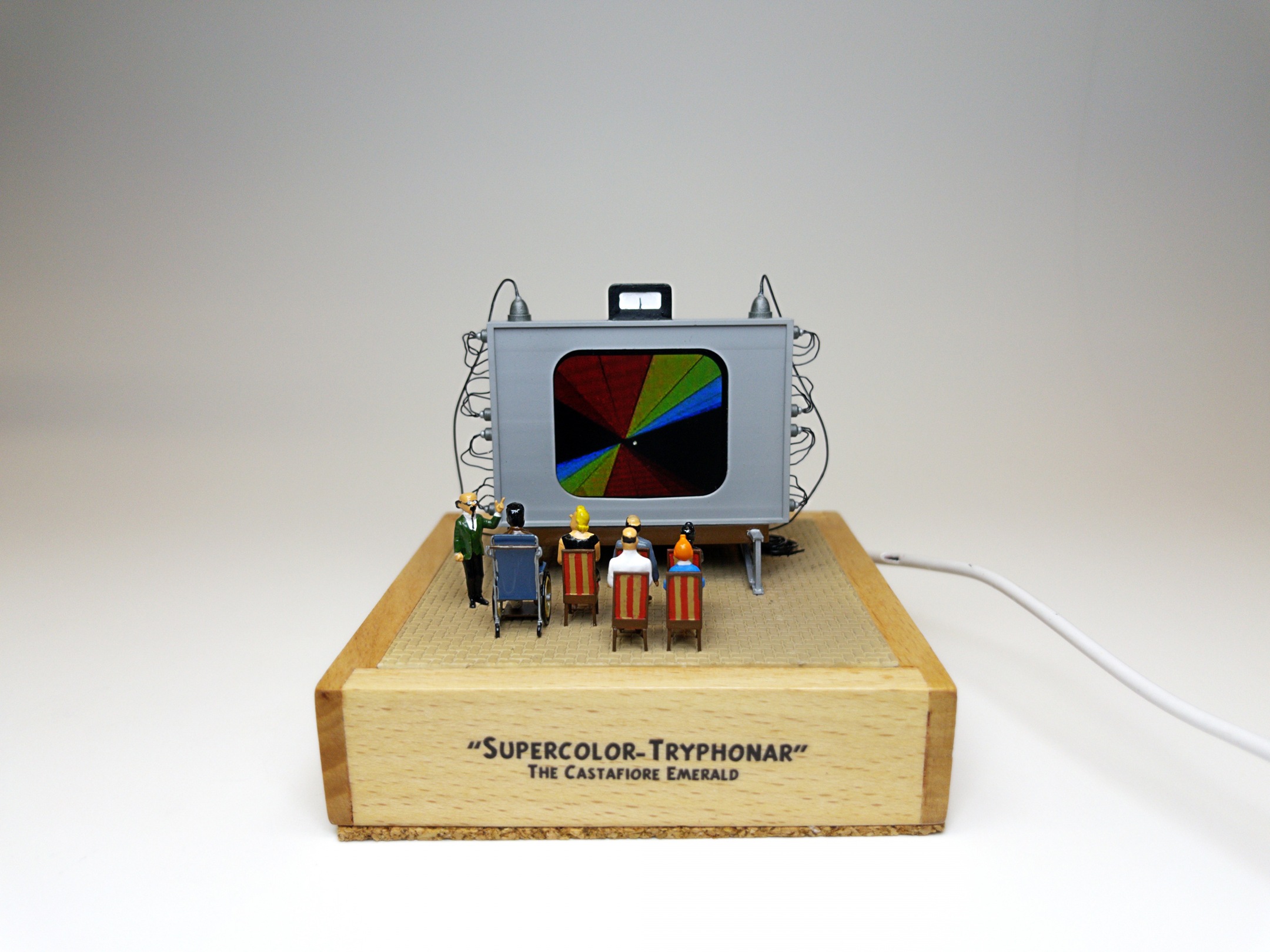
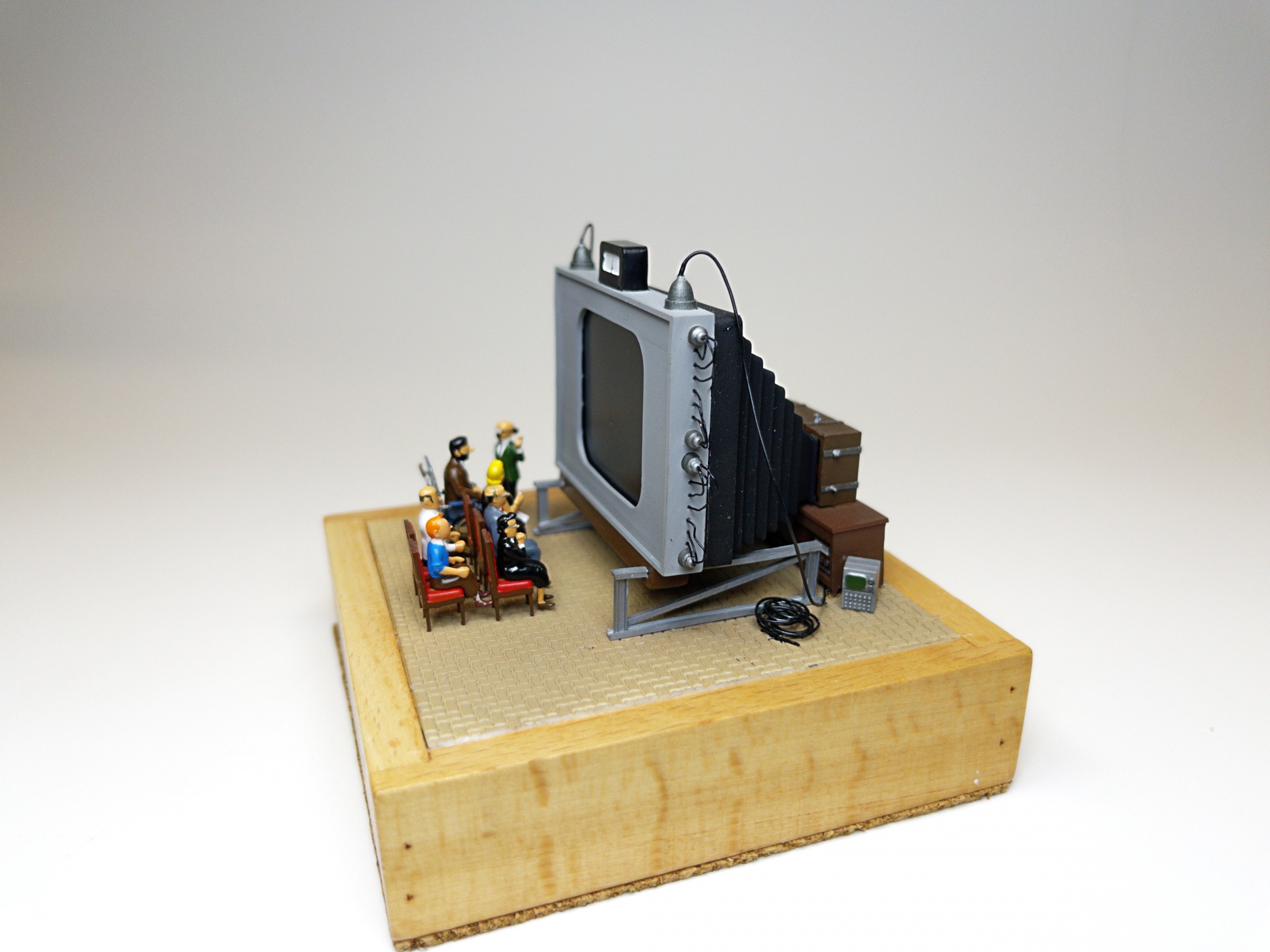
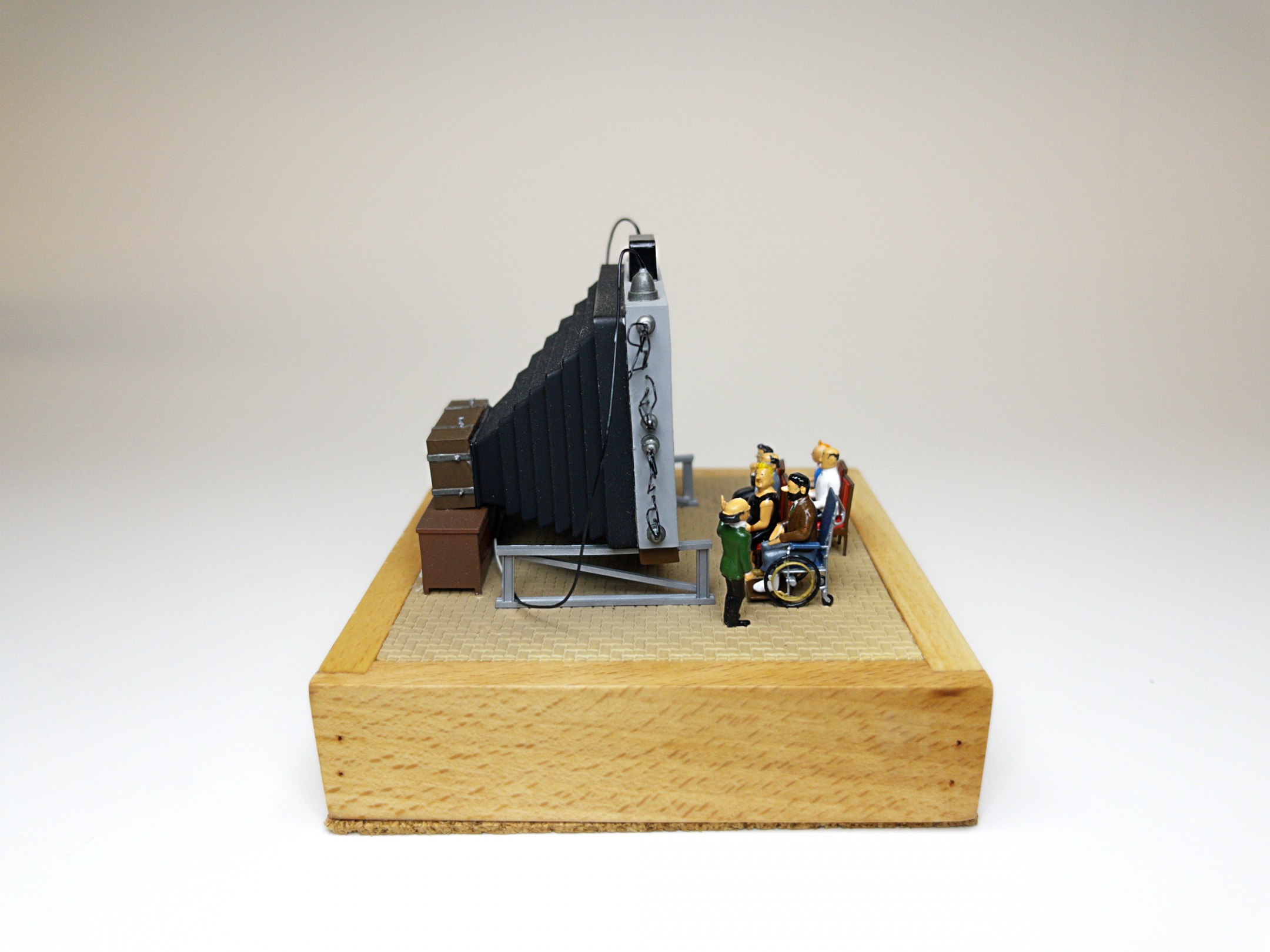
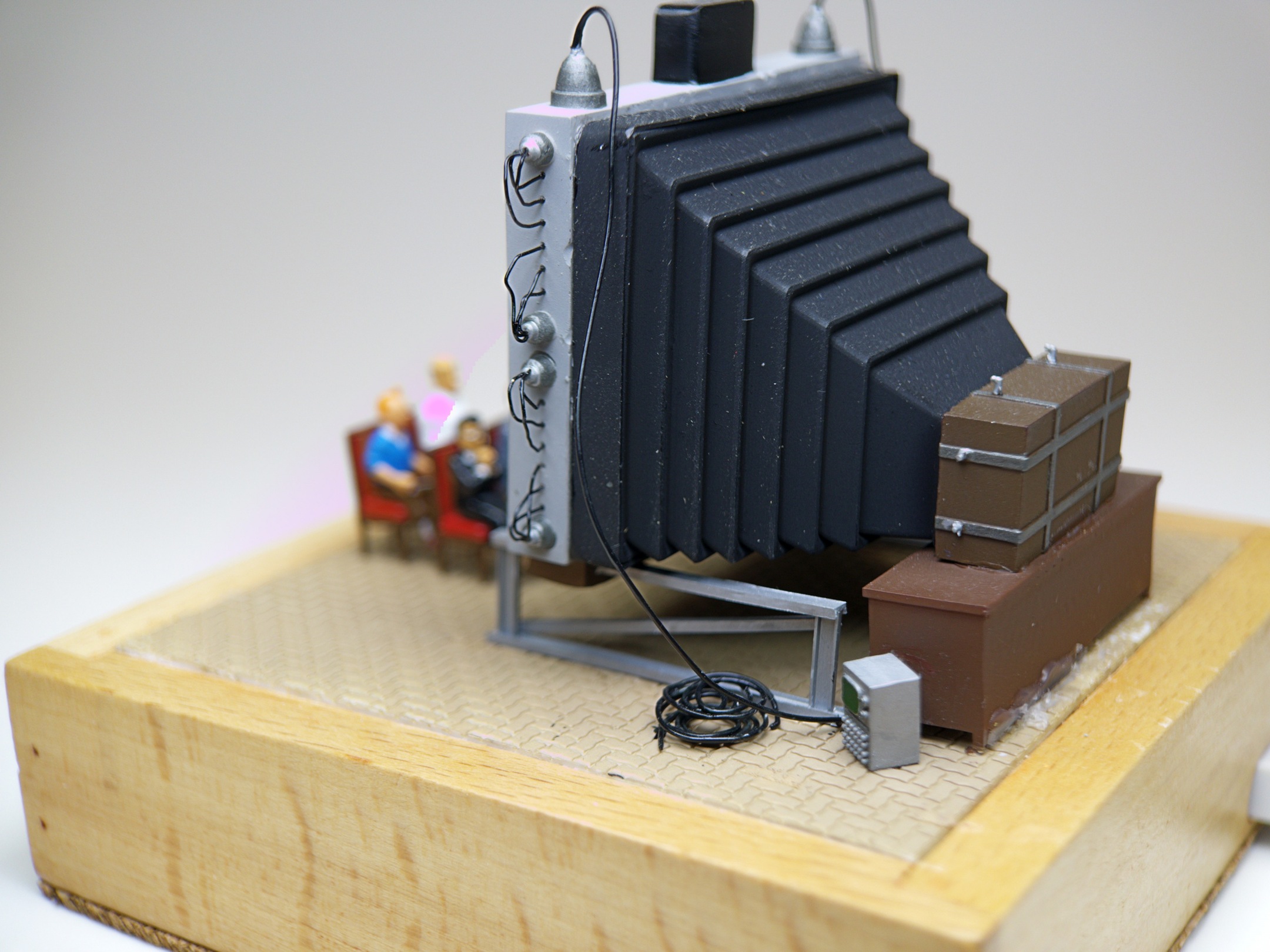
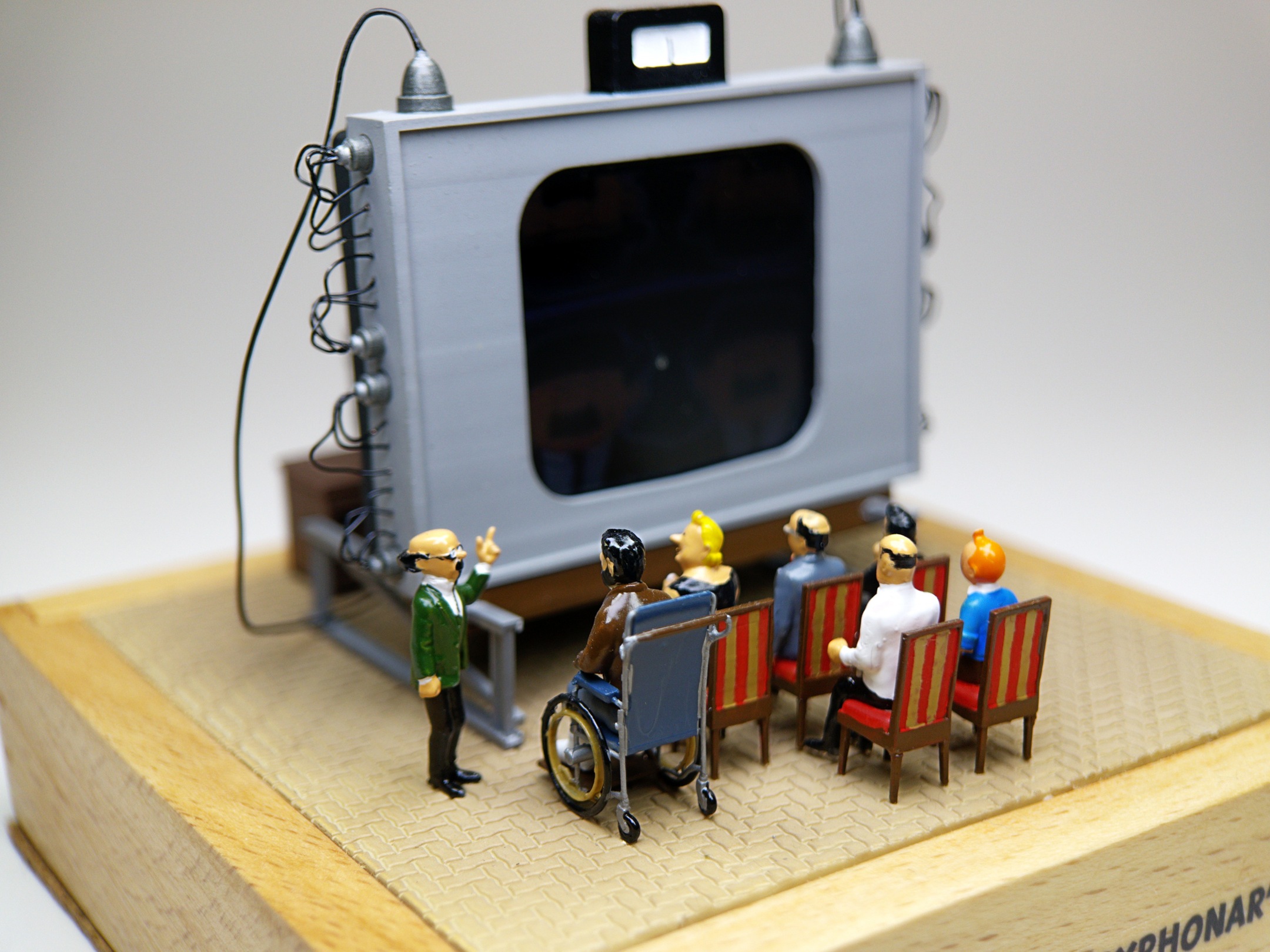
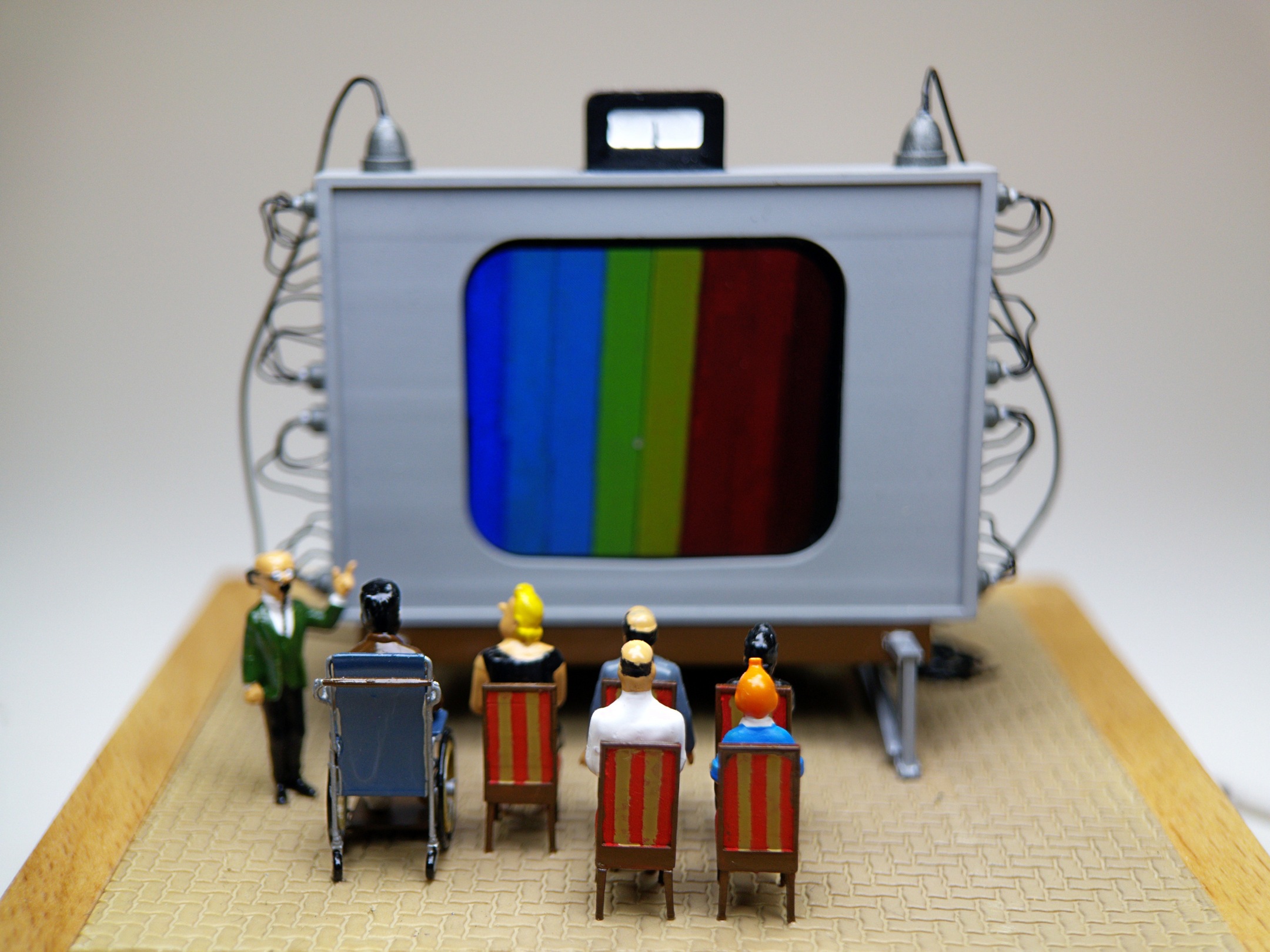
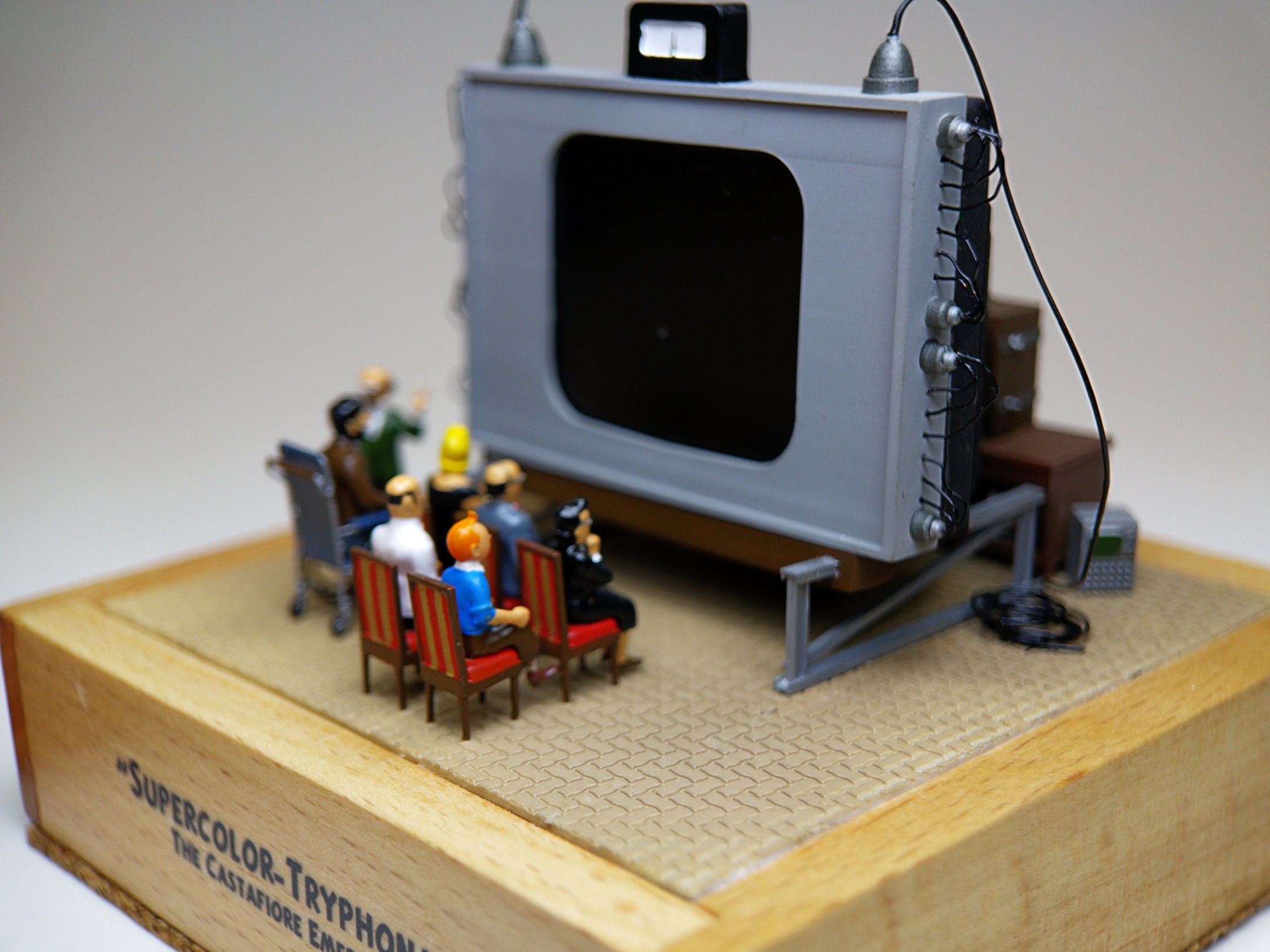
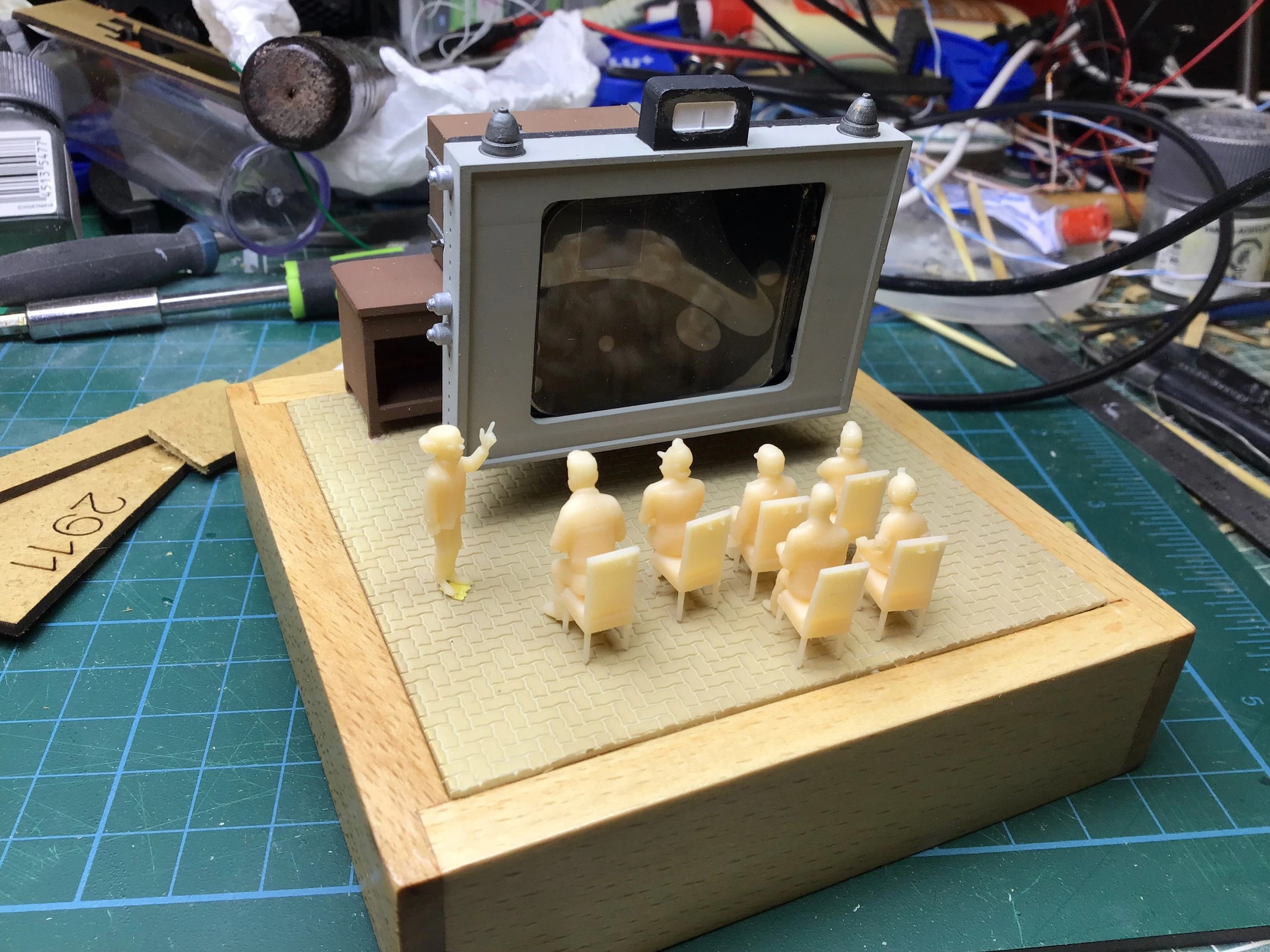
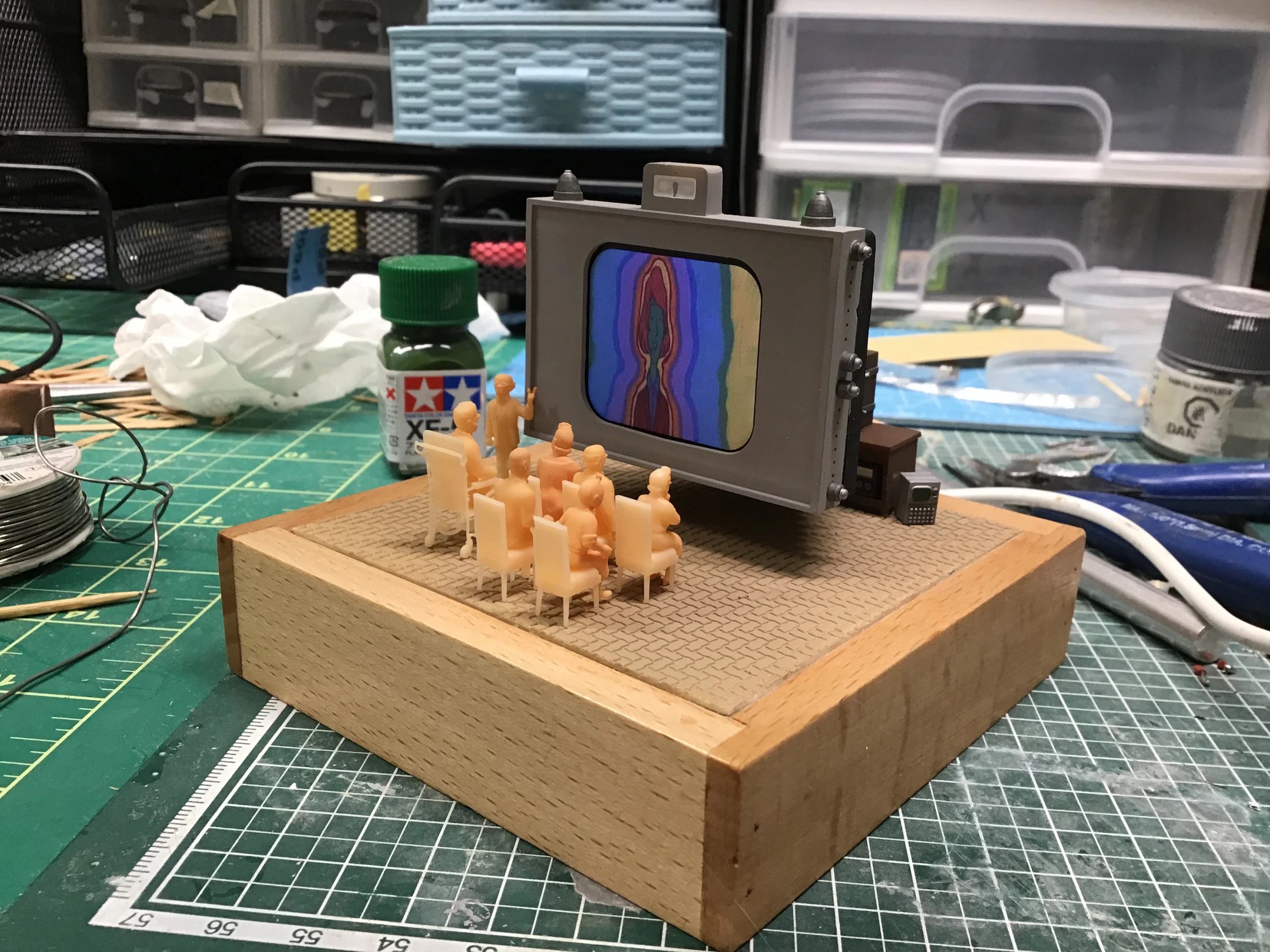
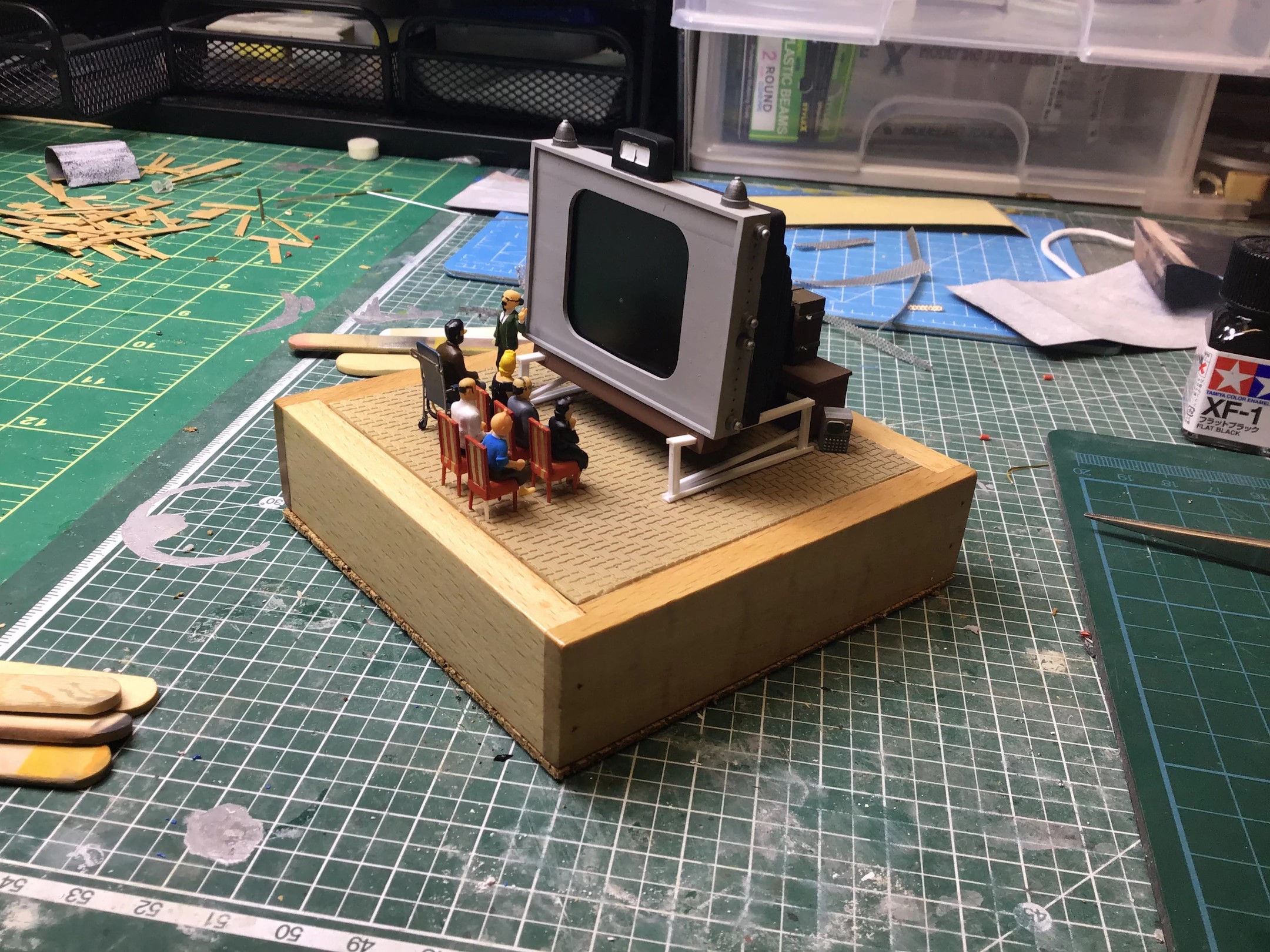
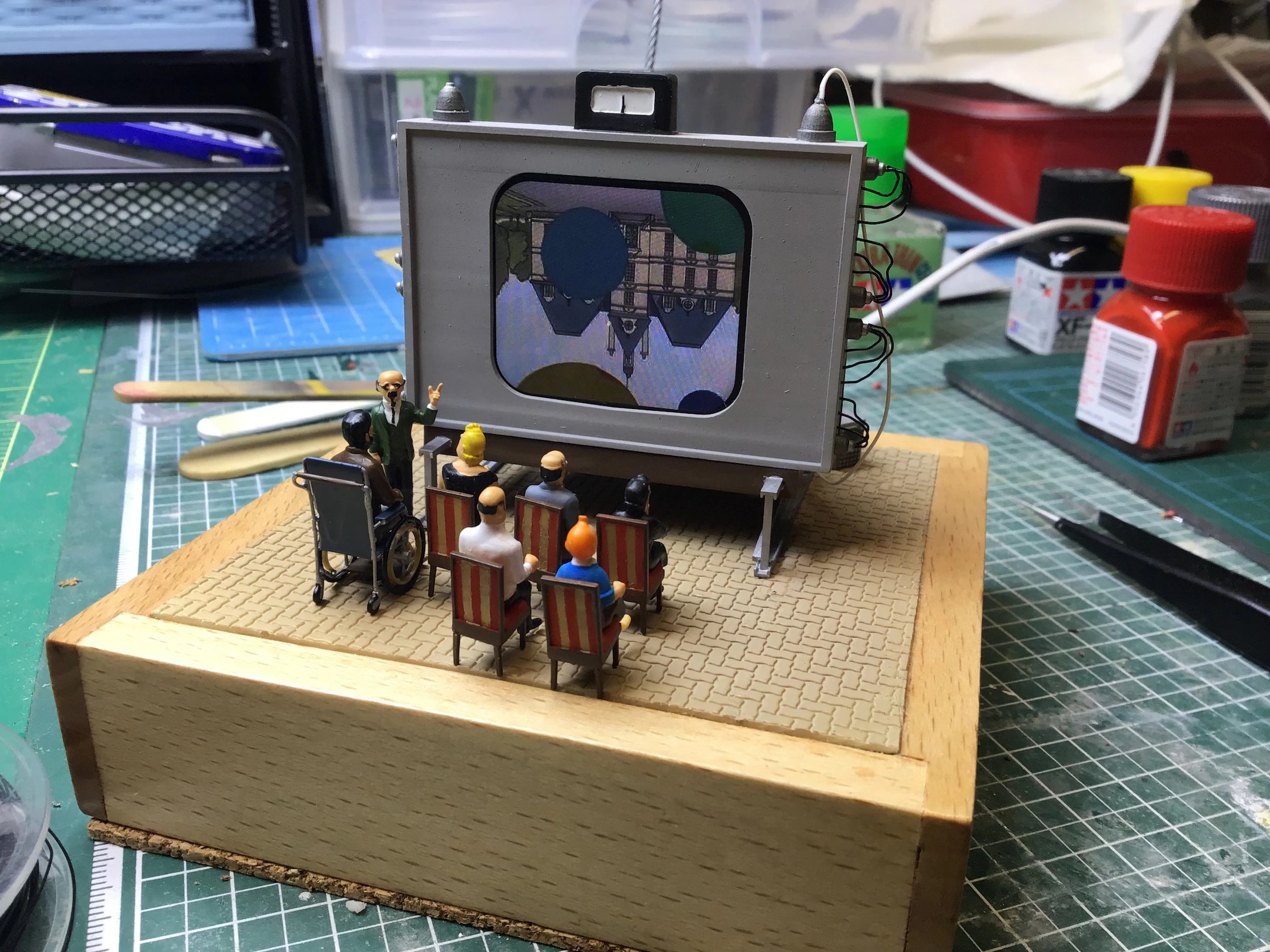
The finished model:
The Video:
This is Tintin project : 050
This project was originally completed on 2025/05/17
The story:
 My 50th Tintin project. Whew! What a milestone!
As this magic number started approaching, I knew I wanted to do something special to mark the occasion. Of course I have plenty of big Tintin projects planned, but given how long they will likely take to complete they are all likely to run parallel to other, smaller, Tintin projects, with unclear timelines. So, getting the timing right just to mark the milestone seemed a bit unlikely.
However, when I saw this project, on Instructables, I instantly knew what I wanted to do.
I have a bit of a history with using more upscale electronics in my builds. Besides the Arduino-backed Tintin XFLR-6 Test Rocket project, I’ve also used the Ardunio in my Studio Ghibli project featuring the Ohm from Nausicaa. However, using an ESP32 microcontroller to display video on a small TFT display? Well, that would be an entirely next-level challenge.
Luckily, I found the following derivative project on YouTube and though it would be easy enough to follow along.
More on how easy it ACTUALLY was later.
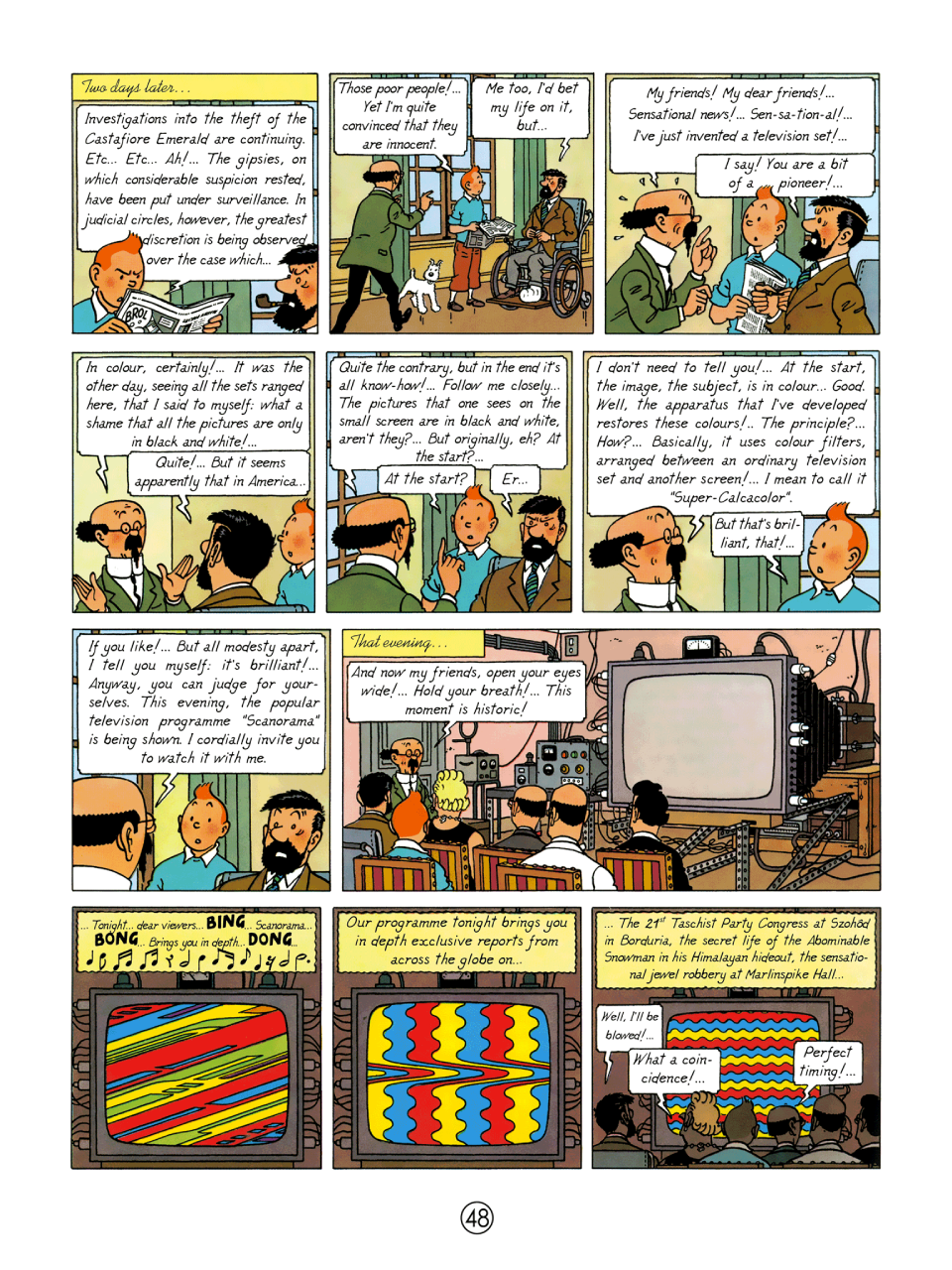
Anyway for an album that I originally thought would only play a small role in my overall Tintin 1/72 project, The Castafiore Emerald seems to be taking up more and more of my Tintin shelf space. But, that Mini TV seemed PERFECT for the Supercolor-Tryphonar that professor Calculus invents.
And a Tintin project that incorporated both audio and video seemed to be the perfect choice to celebrate my 50th project.
The build:
Of course, it’s never that easy, is it?
The biggest challenge to this project was mostly on the front end – getting the electronics to work. Despite the easy-to-follow instructions of the video, I still couldn’t get my project to work.
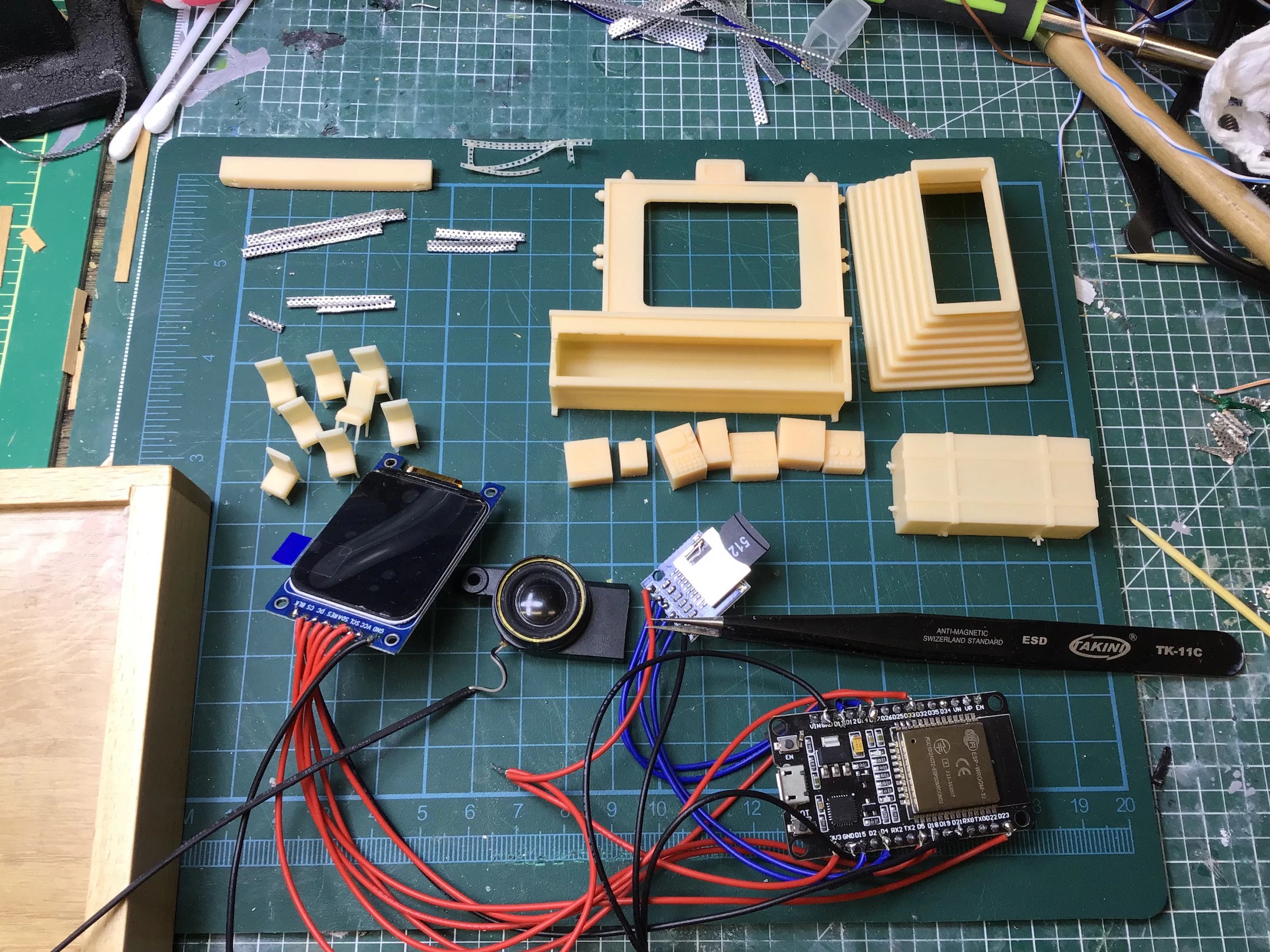
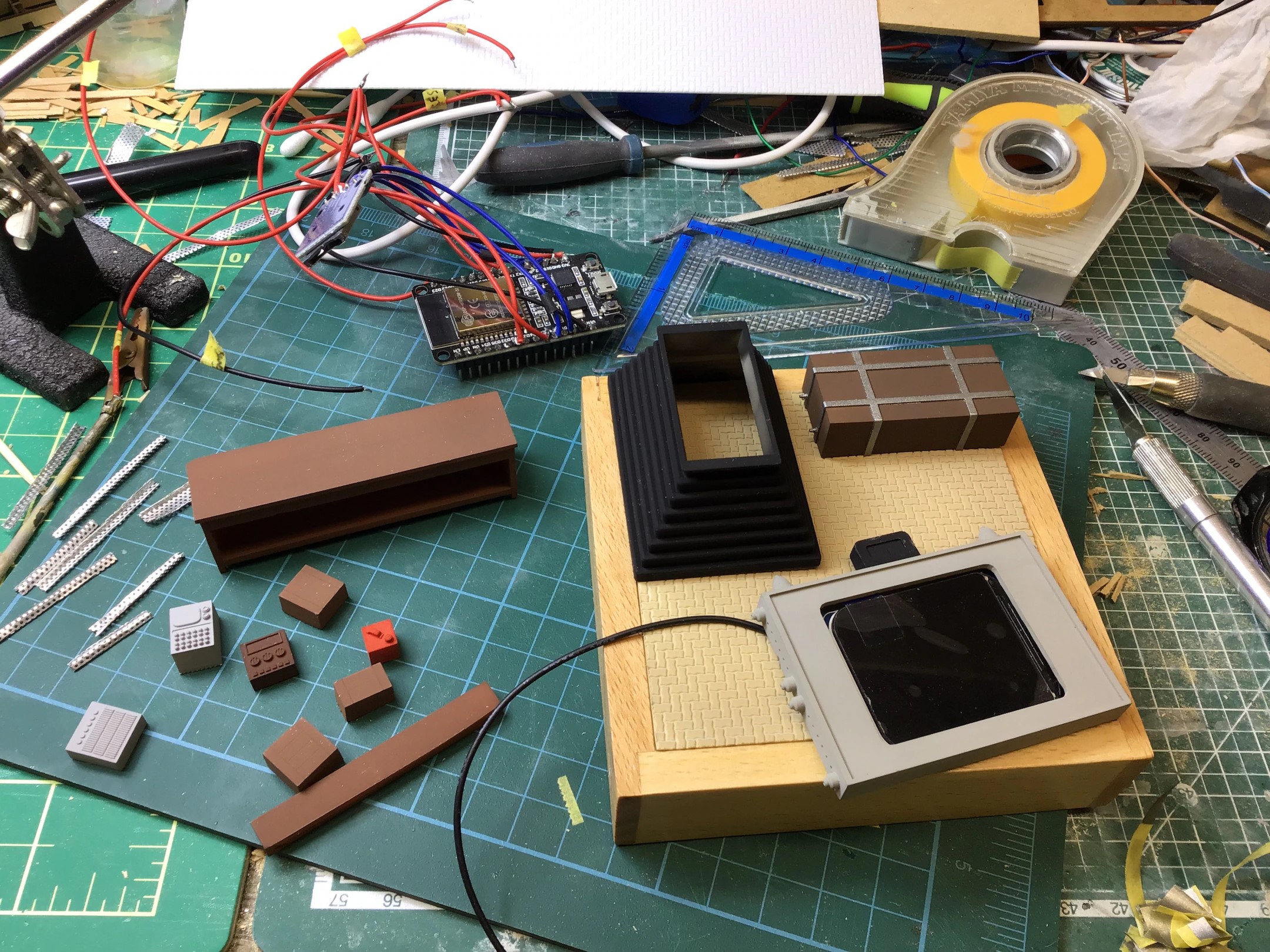
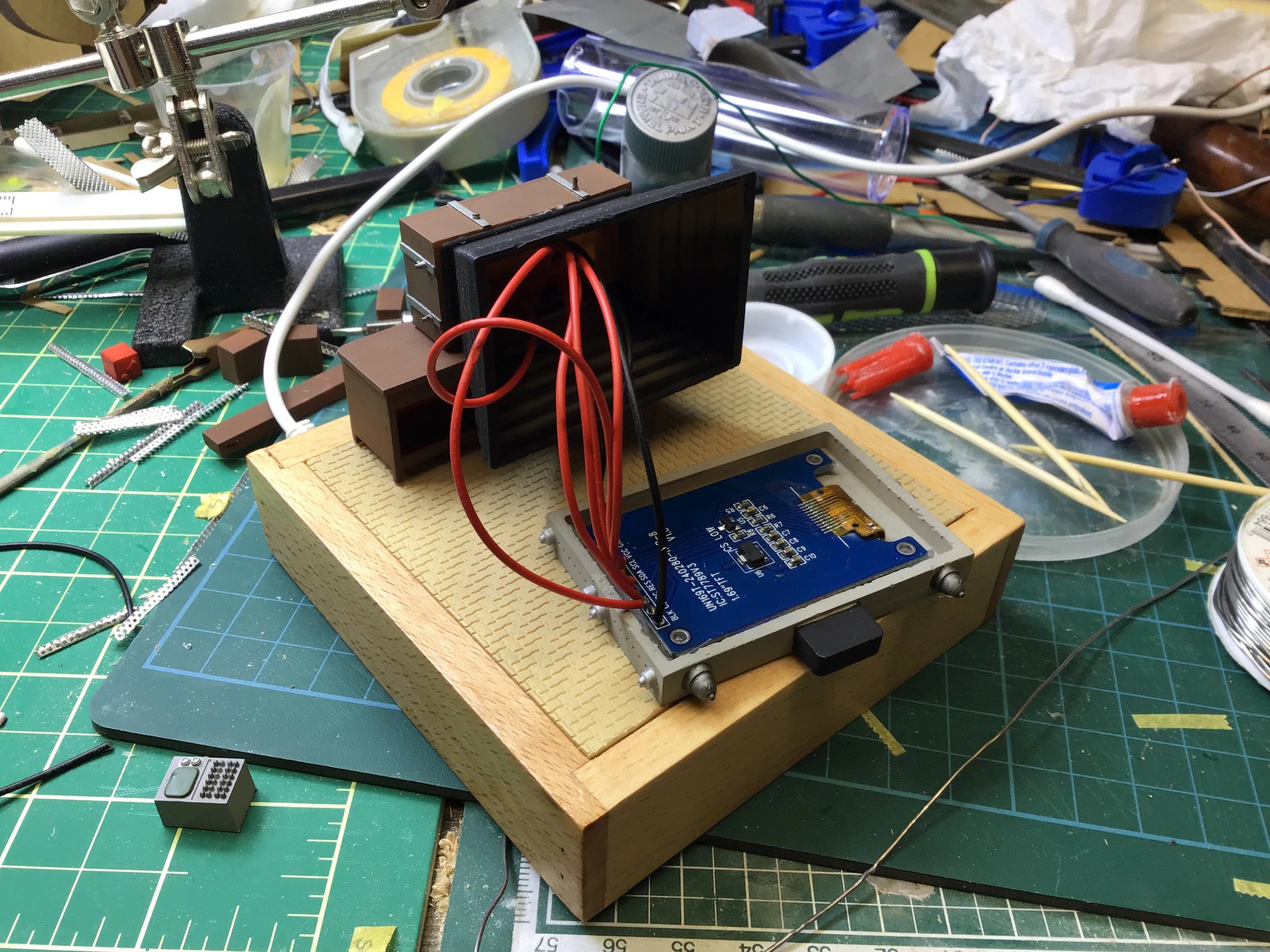
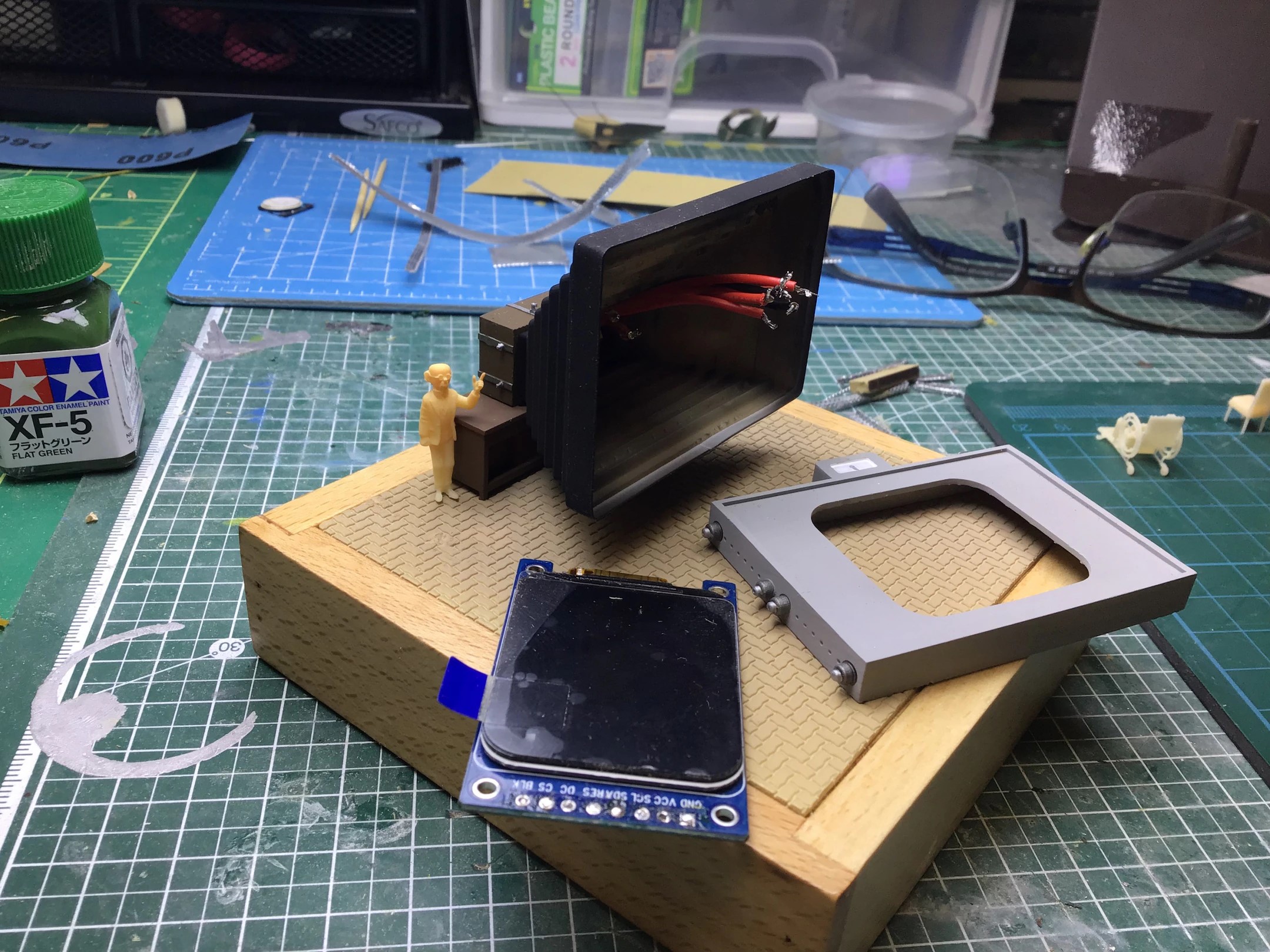
I won’t bore you with the details, but the problem seemed to stem from two main issues. The first was hardware related. I still don’t quite understand why (or how), but the wiring schematic in the video does not show the TFT screen’s backlight pin connected – which in my case it very much needed to be. It’s very frustrating when you plug something in and nothing at all happens because you’re not sure if the issue is faulty hardware, or buggy software related. To source the problem I had to dial it back and start from scratch. Basically I found a test function in the Arduino IDE that would allow me to see if the screen was even working. After I got that up and running, I was able to confirm that a) my screen wasn’t faulty, and b) the backlight (BLK) pin needed to be connected – despite what the video shows.
Of course that was only part of the problem and I still needed to figure out what was the issue with the software. After a lot of trial and error, what it boiled down to was that the Arduino libraries had been updated since the video was first created. So, if you’re into that kind of thing, you’ll need to drop your ESP32 Esspressif board manager back to version 2.x and drop the bb_spi_lcd library back to 2.5. Oh, and be sure your SD card is FAT32… and probably less than 2GB.
Sigh…
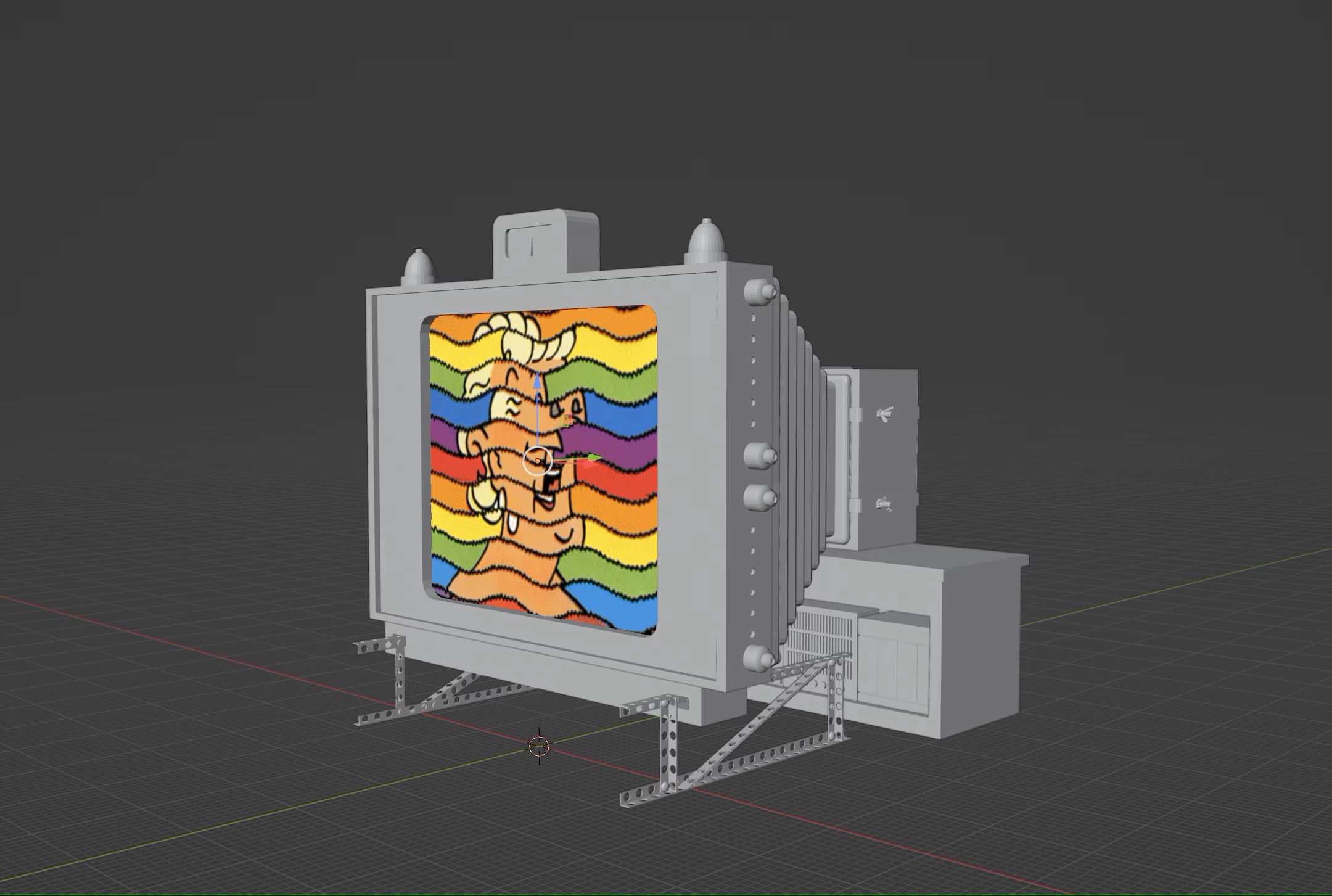
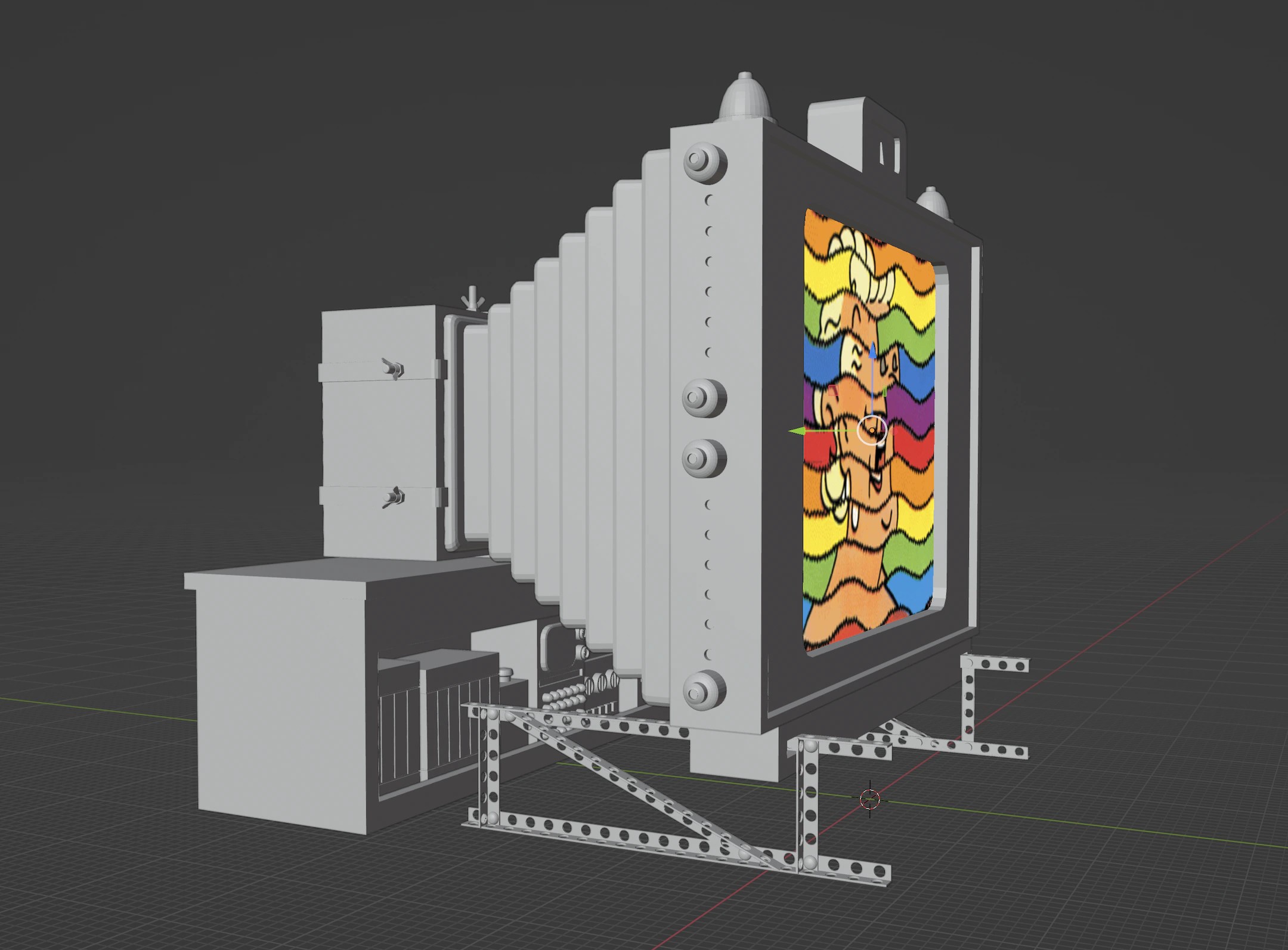
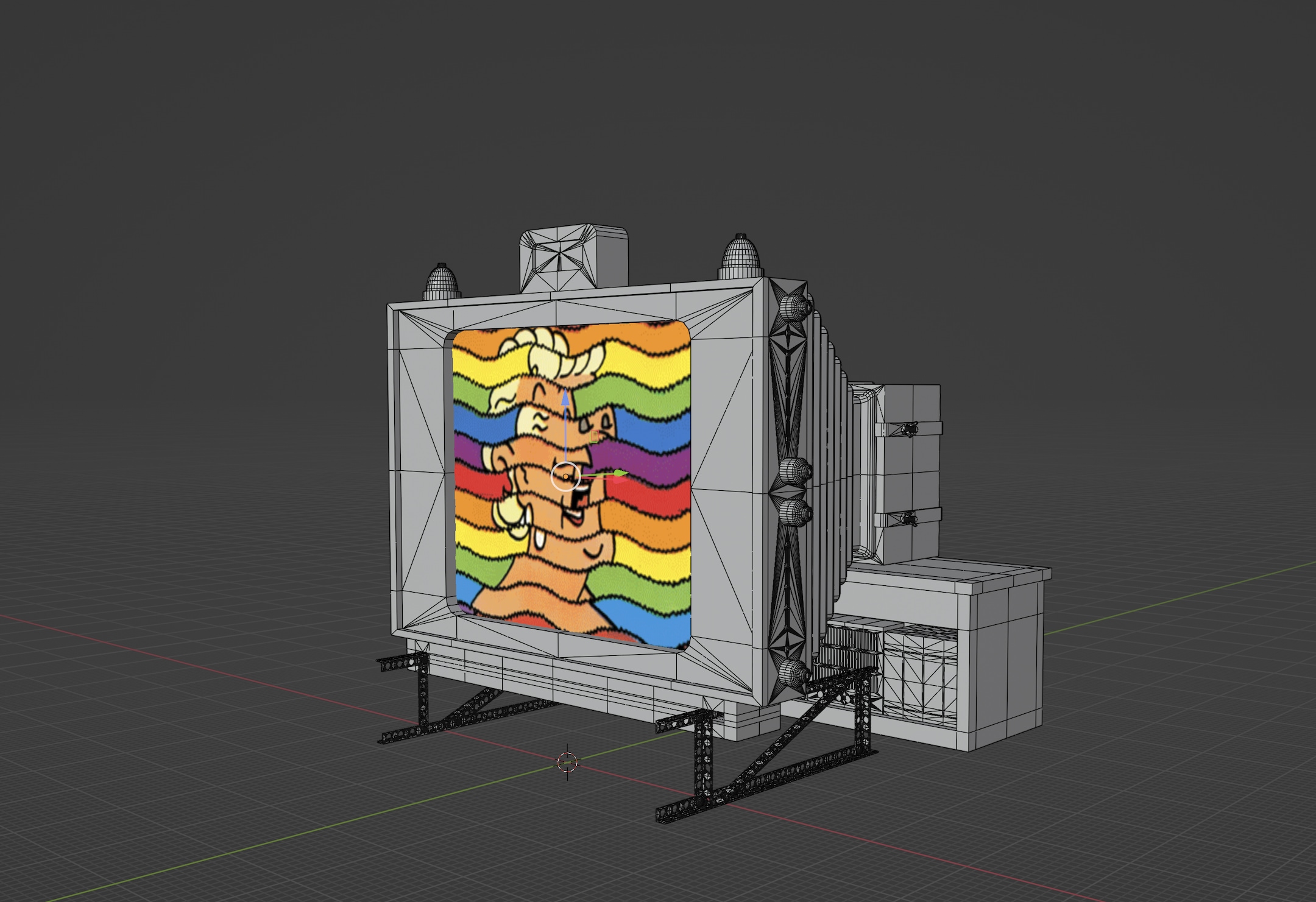
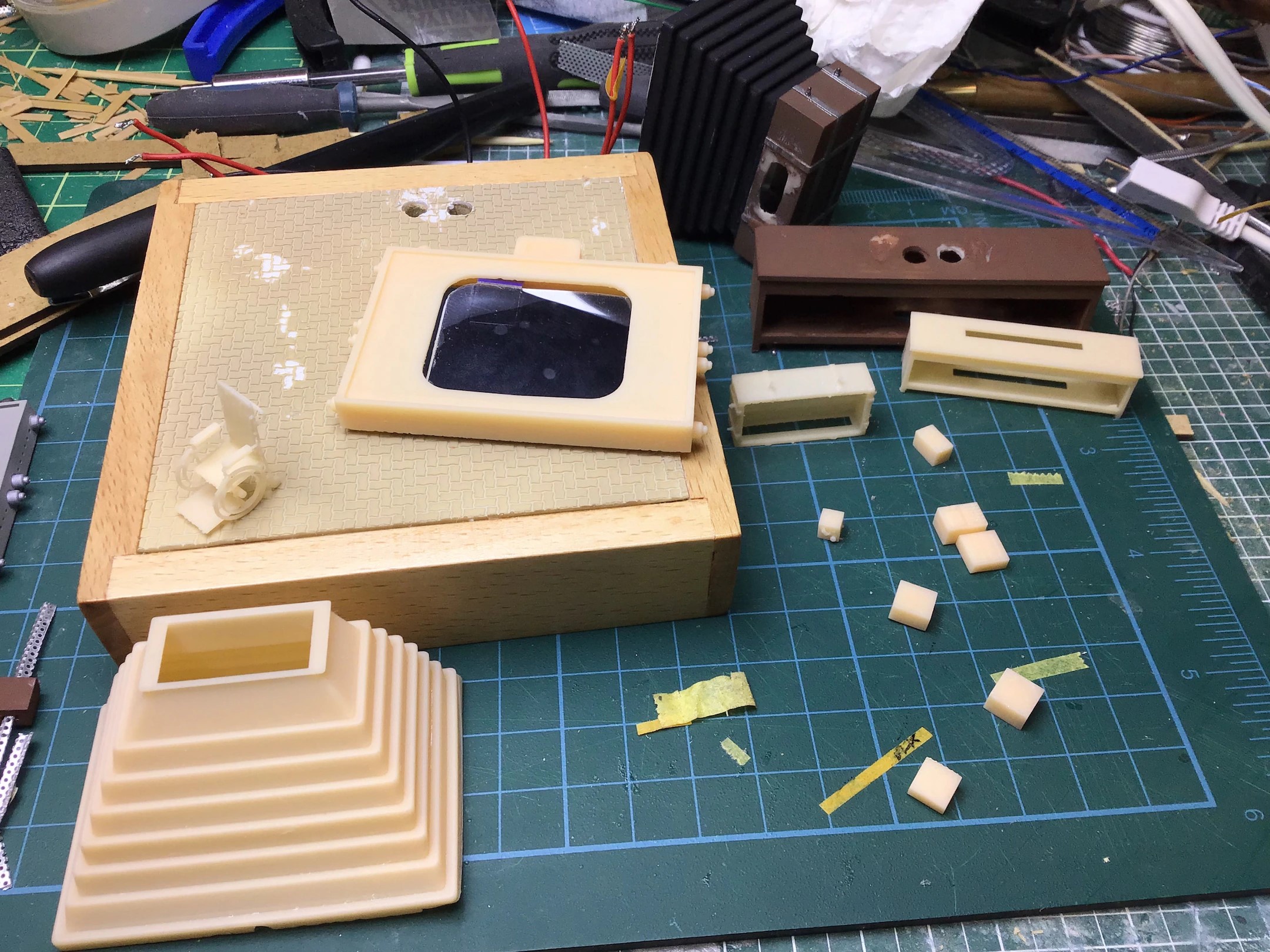
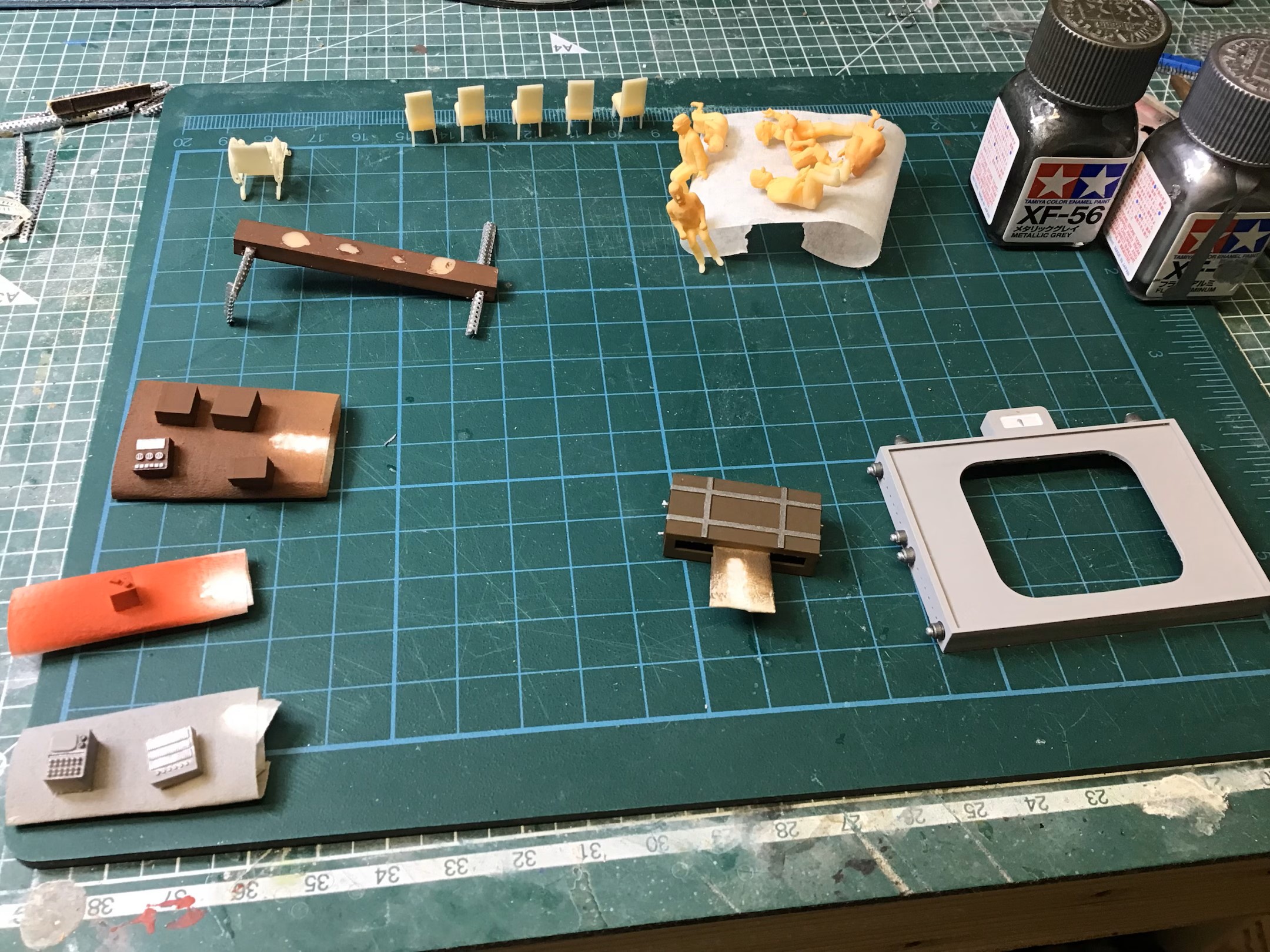
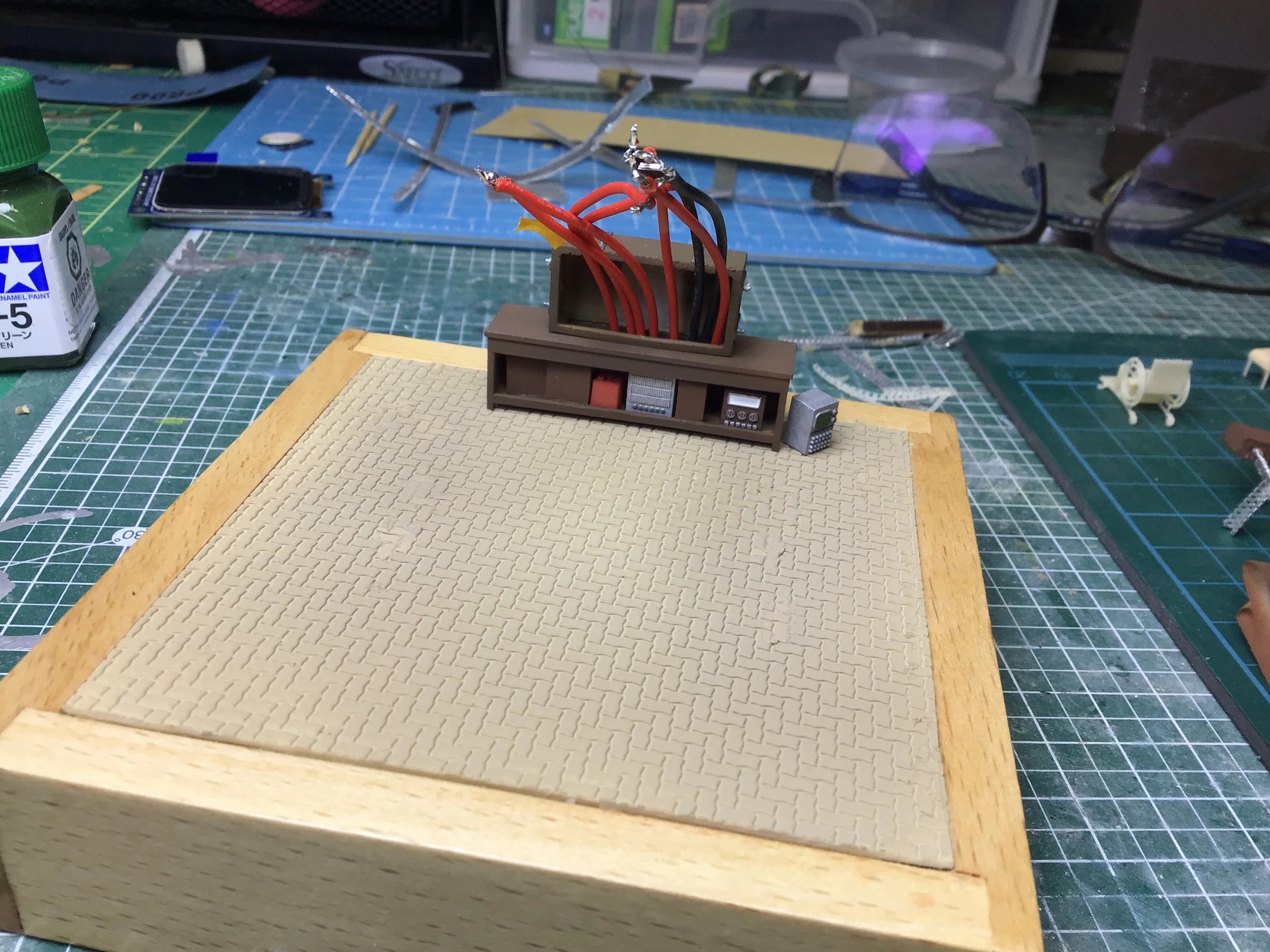
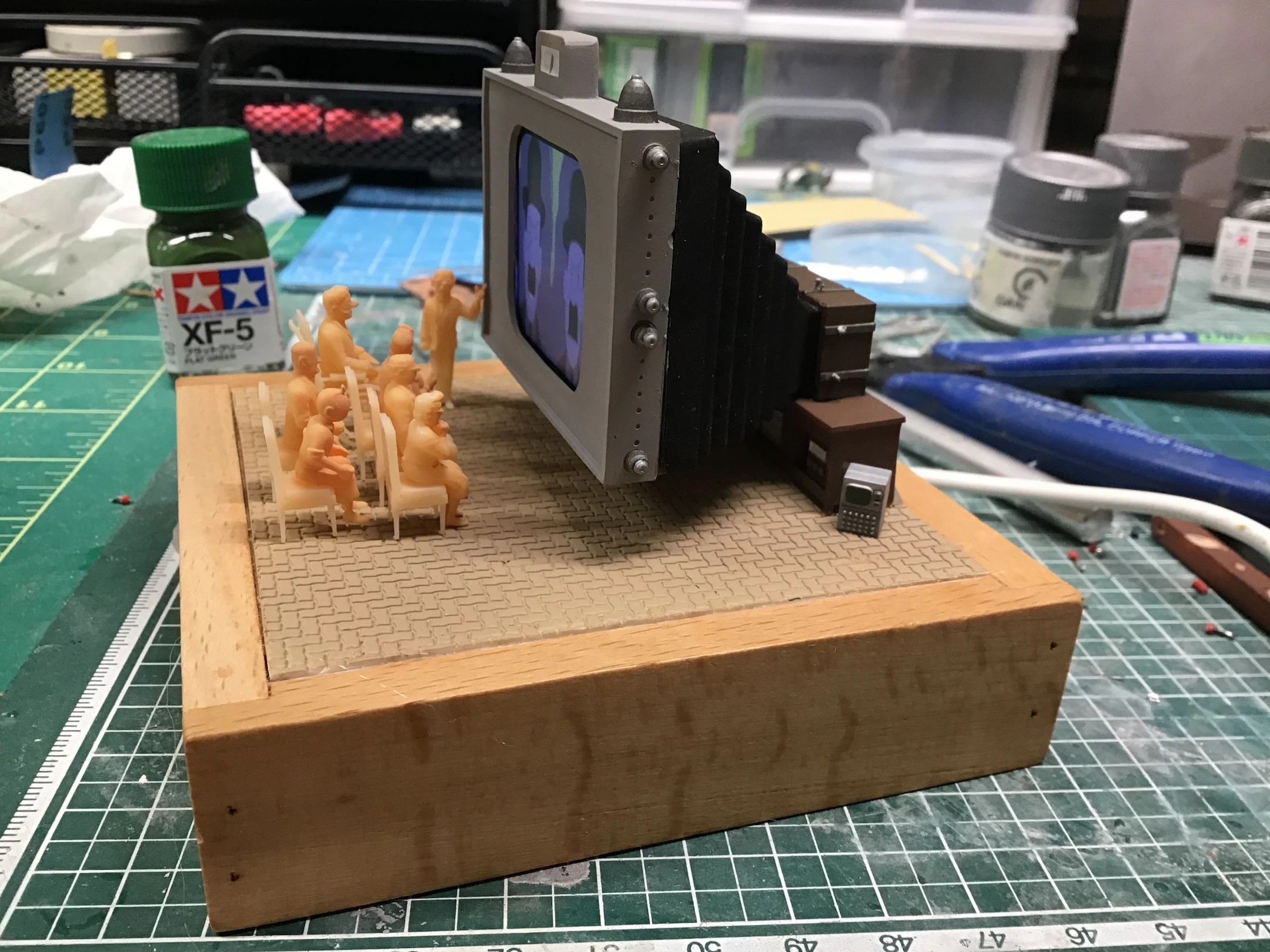
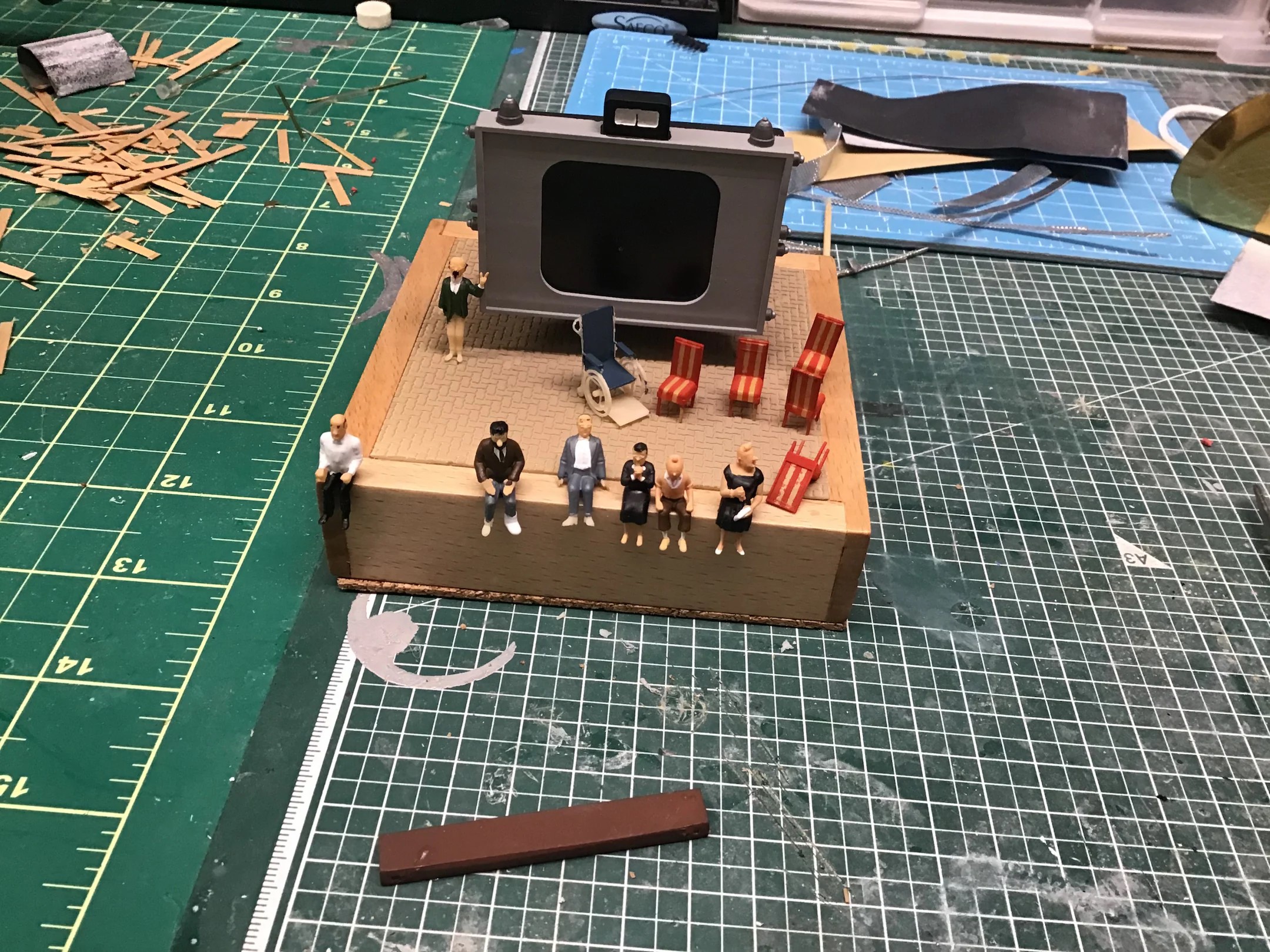
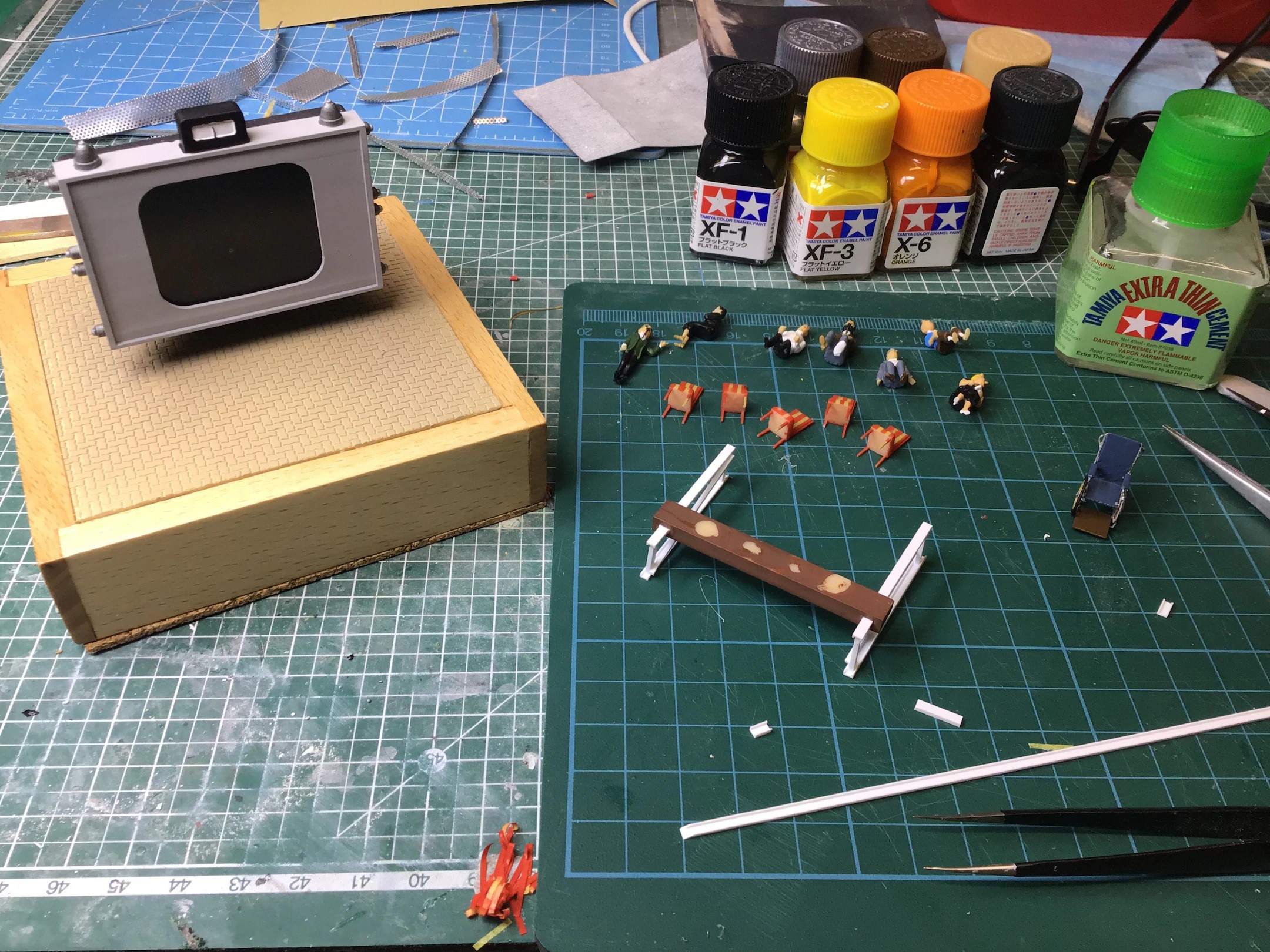
After getting the electronics sorted, I designed the 3D files for the Supercolor-Tryphonar in Blender. You can find the files on Cults3D.com – and since you read about it on my blog, you can used the code STROBEZ to get them for 50% off too!
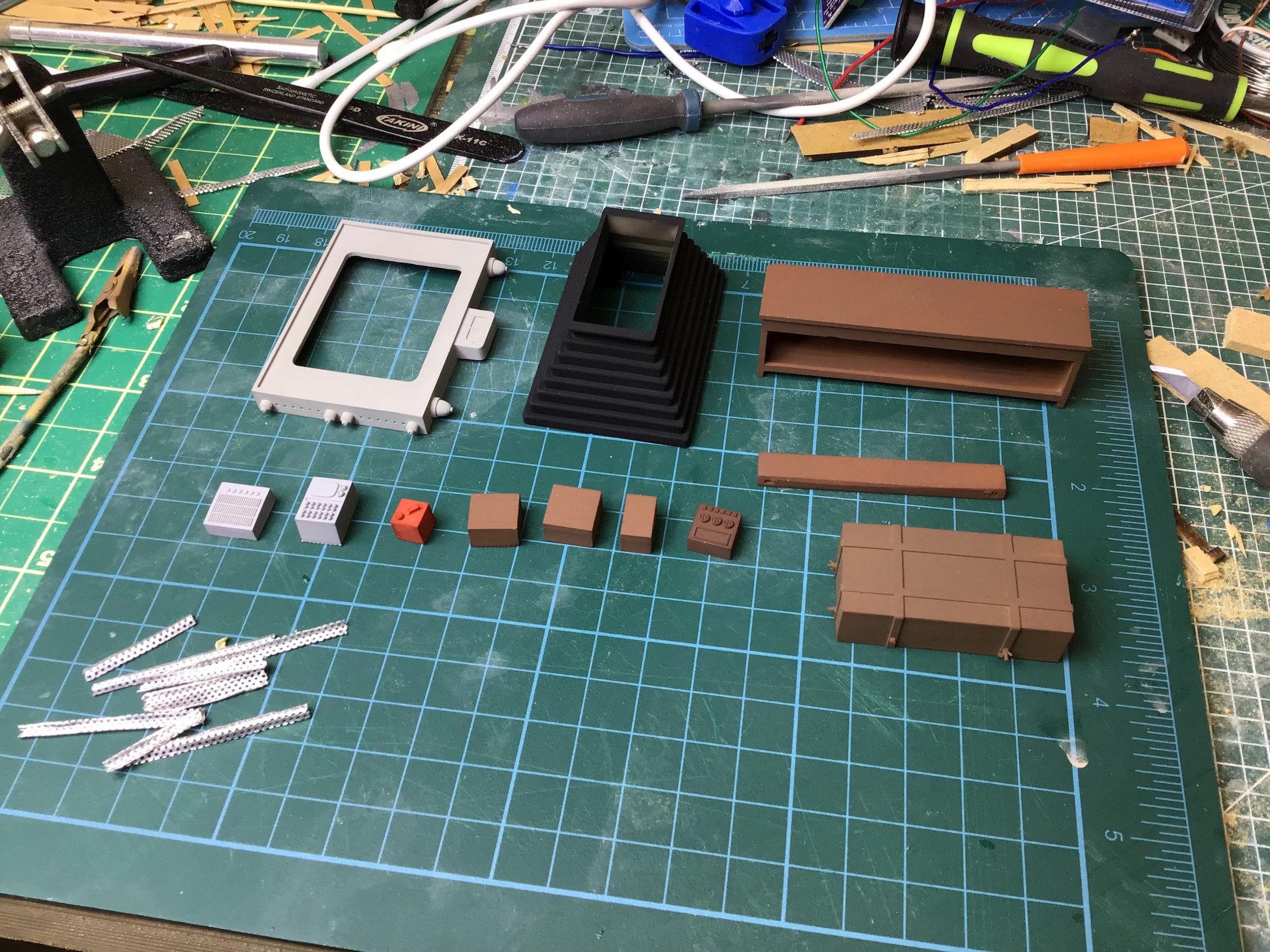
The structure is relatively straightforward, however I did have to re-design the files to match the in-project scale. The files themselves are fine, but to meet the 1/72 requirement the screen is actually bigger than it needs to be. So, for example, while the bench in the fileset is scaled appropriately to the rest of the Supercolor-Tryphonar, it is WAY too big when set against a 1/72 scale Professor Calculus – a fact I only discovered AFTER I’d printed them off.
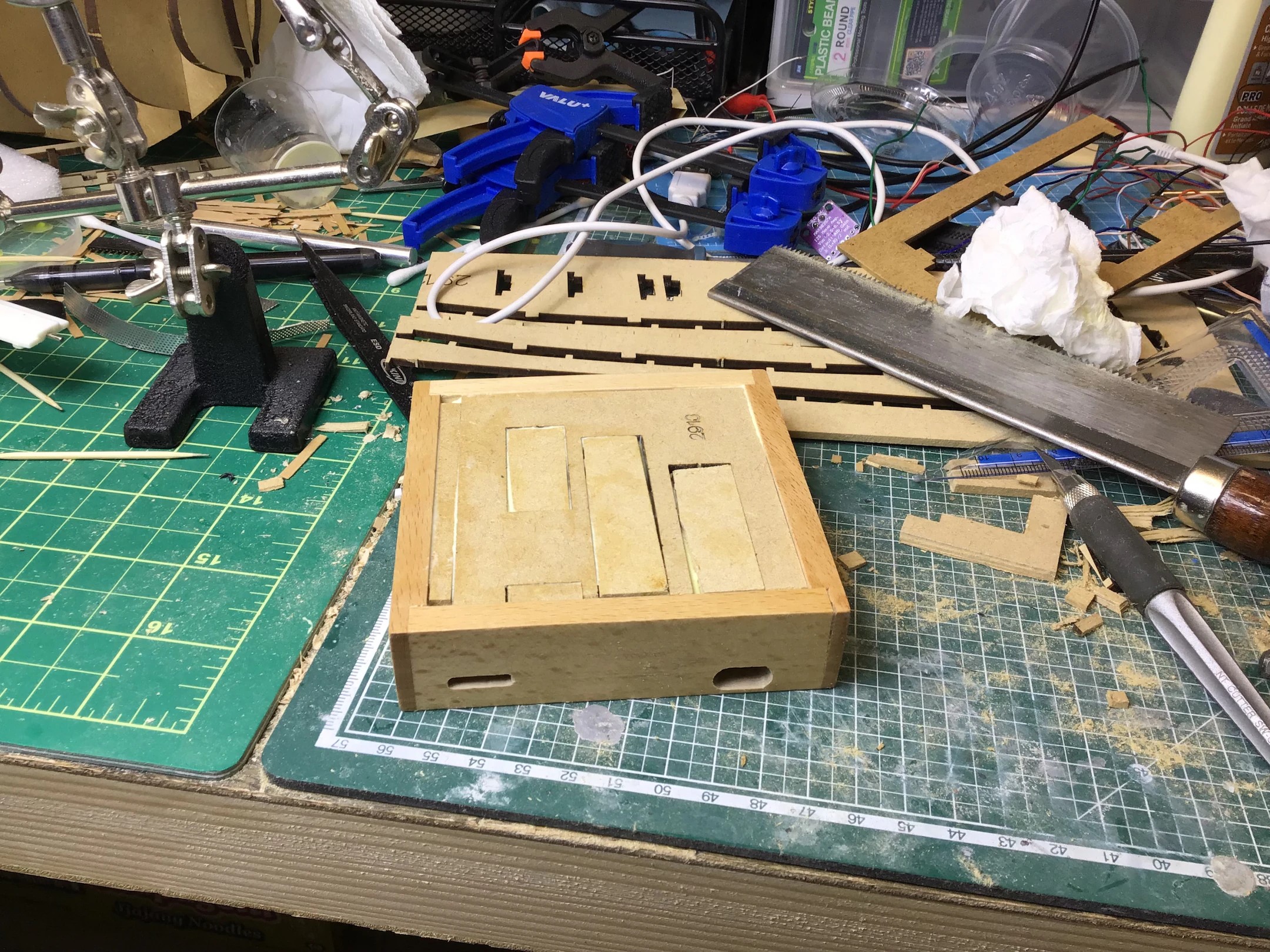
Luckily, I still had enough room to be able to run the wires from the screen, through the Supercolor-Tryphonar shroud and then down through the shelf into the base, where the ESP32 board, the SD card reader and the amplifier/speaker were waiting.
Oh, and that damn wheelchair.
I originally designed and printed Captain Haddock’s wheelchair for a little project unimaginatively named, The Wheelchair. It was small, delicate and fiddly, but it was the main part of that little project. However, since then, that same wheelchair as also been part of a more complicated Citroën Ami 6 project and now part of this project as well. The first time was fun, the second a bit of a challenge… the third time was just a pain. 🙂
All in all, I’m happy with the final result. Feel free to check it out my work below and leave a comment or two.
Discover more from strobez
Subscribe to get the latest posts sent to your email.

As always when it comes to your models and there creation – a masterpiece
Thanks for the kind words, Tommy! I appreciate it!